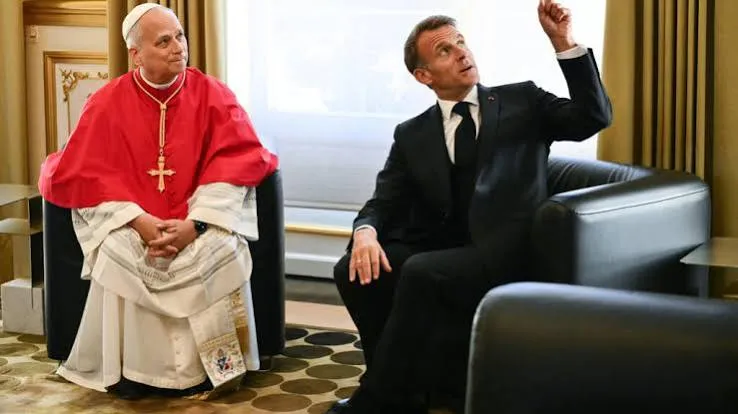
Pope Francis delivered a profound warning on Friday, cautioning humanity against the potential erosion of its essence in the face of rapidly advancing artificial intelligence. This significant pronouncement, made on the inaugural day of his highly anticipated trip to France, underscores the escalating global concern among spiritual leaders and ethicists regarding the unchecked development of AI and its far-reaching societal implications.
The pontiff's recent visit to France served as a poignant backdrop for a message that resonates far beyond the hallowed halls of religious discourse, touching upon the very fabric of our shared future. France, a nation historically at the forefront of philosophical inquiry and a significant player in European policy-making, provided a fitting stage for such a weighty declaration. As a country actively engaged in shaping the ethical guidelines for AI development within the European Union, the Pope's words likely found a receptive audience among those grappling with the moral complexities of a technologically driven world.
His warning arrives at a critical juncture. The past few years have witnessed an unprecedented acceleration in AI capabilities, moving from theoretical concepts to practical applications that are reshaping industries, economies, and daily lives. From sophisticated algorithms influencing social interactions to advanced systems making critical decisions in medicine and finance, the presence of artificial intelligence is becoming ubiquitous. This rapid integration, while promising immense benefits, simultaneously raises profound questions about control, autonomy, and the intrinsic value of human experience. The Pope's intervention serves as a powerful reminder that as we embrace technological progress, we must not inadvertently compromise the core tenets of our humanity, urging a conscious and deliberate approach to innovation.
When Pope Francis speaks of "losing humanity" to AI machines, he invokes a concept far deeper than mere technological dependence. His concern extends to the potential erosion of fundamental human attributes that define our species: empathy, compassion, critical thinking, free will, and the capacity for spiritual and relational depth. In a world increasingly mediated by algorithms, there is a risk that human interactions could become depersonalized, decisions outsourced without ethical oversight, and individual agency diminished. The pontiff's message implicitly champions the irreplaceable value of human dignity and the unique, irreducible nature of human consciousness.
From a theological perspective, humanity is created in the image of God, imbued with a soul and the capacity for moral reasoning and love. The fear is that if AI is developed without a robust ethical framework rooted in these human values, it could inadvertently devalue human life, reduce individuals to data points, and prioritize efficiency or profit over well-being and justice. The warning is not against technology itself, but against the uncritical acceptance of its advancements without considering the profound ethical and existential implications. It calls for a clear distinction between AI as a tool to serve humanity and AI becoming a master that dictates human experience, challenging us to reflect on what it truly means to be human in an increasingly digital age and how we can safeguard these essential qualities.
Artificial intelligence, in its burgeoning forms, presents a paradoxical landscape of immense promise and significant peril. On one hand, AI offers unprecedented opportunities to address some of humanity's most pressing challenges. In medicine, AI-powered diagnostics and drug discovery are revolutionizing healthcare, offering hope for combating intractable diseases. In environmental science, AI can model complex climate patterns and optimize resource management, contributing to sustainability efforts. From enhancing educational tools to streamlining logistical networks, the potential for AI to improve quality of life and foster innovation is undeniable and vast.
However, this transformative power is shadowed by a spectrum of serious ethical and societal risks. The proliferation of AI raises critical questions concerning data privacy and surveillance, as vast amounts of personal information are processed and analyzed, often without full transparency or consent. Algorithmic bias, inherent in the data used to train AI systems, can perpetuate and even amplify existing societal inequalities, leading to discriminatory outcomes in areas like employment, credit, and criminal justice. Furthermore, the advent of sophisticated AI systems brings forth concerns about job displacement on a massive scale, potentially exacerbating economic disparities and requiring fundamental shifts in our understanding of work and social safety nets. Beyond these immediate challenges, the long-term implications delve into existential territory, prompting discussions about the nature of consciousness, the potential for autonomous decision-making by machines, and the ultimate control over systems that could surpass human intelligence. The Pope's warning serves as a crucial reminder that the pursuit of technological advancement must be meticulously balanced with a profound commitment to ethical foresight and human-centric design, ensuring that innovation remains aligned with human values and societal well-being. to navigate these complex issues.
The Vatican, often perceived as a bastion of tradition, has increasingly positioned itself as a significant voice in the global discourse on technology ethics, particularly concerning artificial intelligence. This engagement is not entirely new; the Catholic Church has a long history of grappling with scientific advancements, from the Copernican revolution to modern bioethics, consistently emphasizing the moral dimensions of human progress. However, the rapid ascent of AI has spurred a more proactive and urgent response from the Holy See, recognizing the profound impact these technologies will have on human dignity, social justice, and the common good.
Under Pope Francis's leadership, the Vatican has actively sought to convene experts, foster dialogue, and issue guidelines on ethical AI. A notable initiative is the "Rome Call for AI Ethics," an appeal signed by major tech companies, academic institutions, and religious leaders, advocating for the development of AI that respects human dignity, promotes transparency, and ensures accountability. This document outlines principles such as privacy, reliability, security, and impartiality, aiming to steer AI development towards serving humanity rather than dominating it. The Pope's recent warning in France can be seen as a direct extension of this ongoing commitment, reinforcing the Vatican's role not merely as a moral arbiter but as a constructive participant in shaping a technologically advanced yet ethically sound future. The Church's perspective, deeply rooted in centuries of philosophical and theological reflection on human nature and moral responsibility, offers a unique and essential contribution to an often-secular debate, emphasizing the irreplaceable value of the human person and the need for technology to be a tool for liberation and flourishing, not subjugation or alienation. [[internal_anchor: Learn more about the ethical implications of digital transformation | topic: Digital Ethics]].
The pontiff's stark warning against "losing humanity" to AI machines is more than a cautionary tale; it is a profound call to deliberate action and principled innovation for all stakeholders. For developers and engineers, it underscores the imperative to embed ethical considerations at every stage of AI design and deployment, moving beyond mere functionality to prioritize human well-being, fairness, and transparency. This means developing AI systems that are explainable, accountable, and designed with built-in mechanisms to prevent bias and ensure equitable outcomes. The focus must shift towards creating "human-centric AI" that augments human capabilities rather than diminishes them, fostering creativity, critical thinking, and genuine human connection.
For policymakers and governments, the message highlights the urgent need for robust regulatory frameworks that can keep pace with technological advancements. This includes establishing clear legal responsibilities for AI's actions, safeguarding data privacy, and implementing international standards to prevent a fragmented and potentially dangerous global AI landscape. The European Union's efforts to regulate AI, for instance, represent one such attempt to create a legal framework that balances innovation with ethical safeguards. Furthermore, educational institutions and civil society organizations have a vital role to play in fostering public literacy about AI, enabling informed public discourse, and empowering citizens to engage critically with these technologies. The Pope's intervention serves as a powerful catalyst for a broader societal conversation about the kind of future we wish to build – one where technology serves as a powerful instrument for human flourishing, guided by wisdom, compassion, and an unwavering commitment to the inherent dignity of every person. This collective endeavor requires sustained commitment to [[internal_anchor: developing ethical AI frameworks | topic: AI Ethics]] and ensuring that the pursuit of progress never overshadows our fundamental human values. The future of work, for example, is a key area where ethical considerations must guide policy and innovation to prevent mass displacement and ensure a just transition for all. [[internal_anchor: Explore the future of work in the age of automation | topic: Future of Work]].
Pope Francis's warning in France resonates as a potent reminder that the trajectory of artificial intelligence is not predetermined; it is shaped by human choices. As AI continues its rapid ascent, the imperative to prioritize human dignity, ethical considerations, and a vision of technology that serves, rather than subsumes, humanity becomes ever more critical. The challenge lies in harnessing AI's immense potential while consciously safeguarding the very essence of what makes us human.