A first in two thousand years of the papacy
Pope Leo XIV has submitted a mail-in ballot for the US midterm elections, becoming the first pope to vote in a US election and likely the first pontiff ever to vote in a secular democratic election. The Vatican confirmed the historic ballot on Friday 30 October 2026, ahead of the 3 November midterms that will decide control of the US Congress.
"In keeping with this long-standing practice of civic participation, he has submitted his mail-in ballot in Chicago," the Vatican press office said in a statement. "The Holy Father expresses his belief in the right and the duty of citizens to participate in democratic processes." The Vatican did not say which candidates Leo had voted for, and nothing in the announcement suggested any preference in the contests on his ballot.
The news is historic because of who Leo is and what the papacy has always been. The Catholic Church is nearly two thousand years old, and its leaders have almost never been citizens of a democracy holding an election. Popes have come from Italy, Poland, Germany, Argentina and now the United States, but none had previously cast a ballot in a national election while serving as pontiff. Michael Walsh, a British historian and author who has written several books on the papacy, told CNN that he did not think popes had ever voted in a democratic election before.
The Chicago connection
Leo is the first American-born pope, and his American roots run deep. Born Robert Francis Prevost in Chicago in 1955, he grew up in the suburb of Dolton and was elected to lead the 1.4-billion-member Church by the world's cardinals in May 2025. He remains a US citizen, and he also holds Peruvian citizenship after more than 20 years living in Peru as a missionary priest and bishop.
He is registered to vote in Illinois under his birth name, Robert Francis Prevost, in Will County, at an address in the Chicago suburb of New Lenox, where his brother John lives. The Chicago Sun-Times first reported the ballot request, quoting Kim Fladhammer, chief of staff at the Will County clerk's office, as confirming that Prevost was among the people who had requested a vote-by-mail ballot for the upcoming election. The request was made on 3 October.
It is not clear how the pope returned the ballot, or whether he sent it by mail from the Vatican. His brother John was in the Vatican on Wednesday with a group of pilgrims from St Jude's Parish in New Lenox for a meeting with the pope, but the Vatican statement did not detail the ballot's journey. What is clear is that the ballot was submitted in Chicago, and that the act itself, rather than its logistics, is what made history.
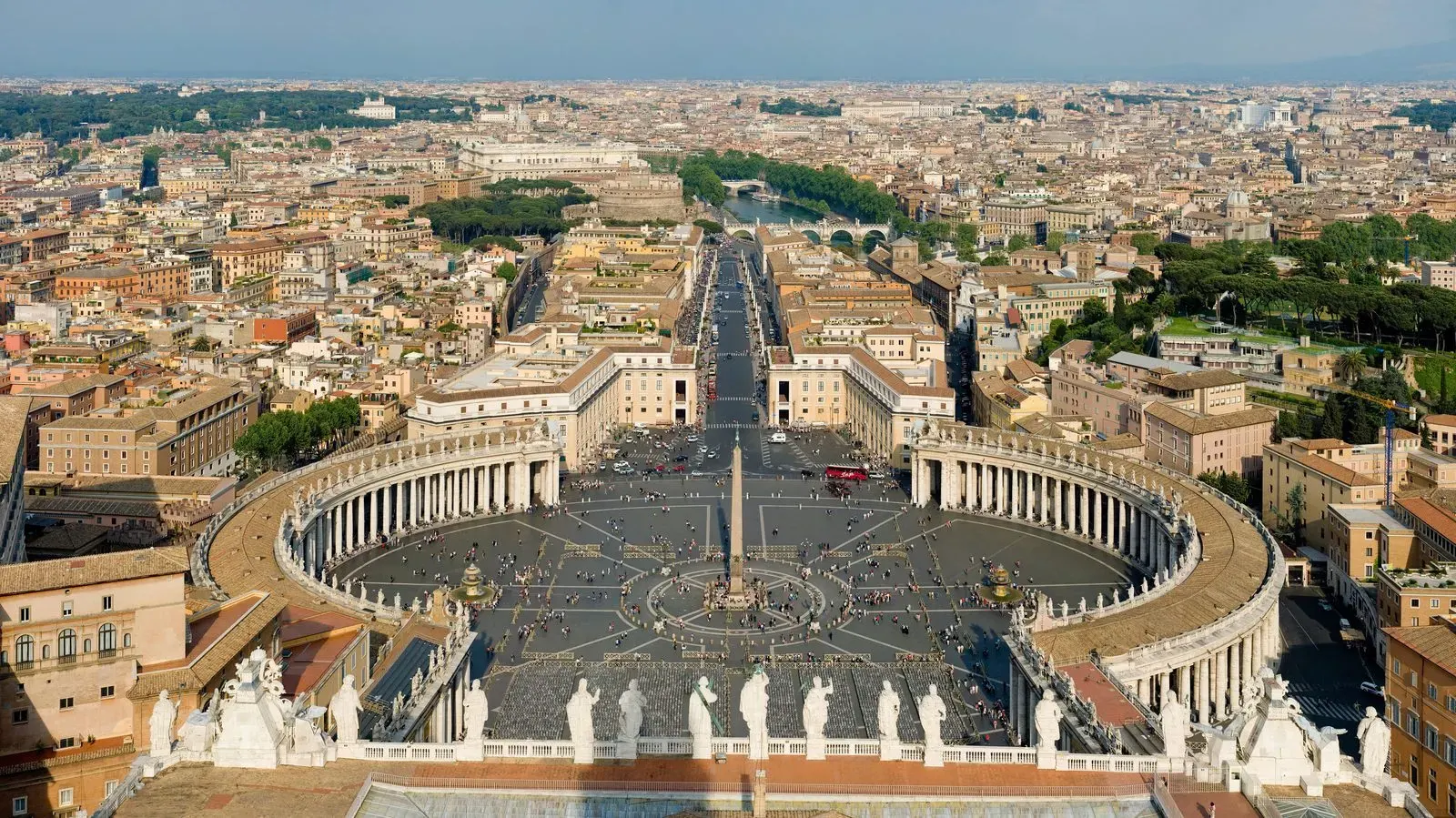 St Peter's Square at the Vatican
. Credit: Diliff, CC BY-SA 3.0.
What was on the ballot
The pope's ballot is expected to include votes for the Illinois races that dominate this midterm cycle. Voters in the solidly Democratic state will select a successor for retiring US Senator Dick Durbin and choose whether to re-elect Governor JB Pritzker, who is seeking a third term. The ballot also covers races for the House of Representatives and for state and county offices. There are no statewide ballot issues on the Illinois ballot this year.
President Donald Trump is not on the ballot, but he has campaigned hard to try to preserve Republican control of the US House and Senate for the final two years of his second term, with the public unhappy about the high cost of living and the Iran war. Leo met Pritzker, a candidate for Illinois governor, in the Vatican in November 2025, but the Vatican has given no indication of how the pope voted in any race, and this article makes no speculation about his choices.
The Vatican's framing of the vote was deliberately civic rather than partisan. The statement stressed that Leo "has exercised his right to vote as a United States citizen" and has done so "whenever he was eligible to do so," including during his years of residence in Peru, when he voted whenever he was eligible. The emphasis was on participation as a duty of citizenship, not on the outcome of any contest.
A long voting record
The pope's voting history, as recorded by Illinois election authorities, is that of an engaged but unaligned citizen. Illinois does not register voters by party, so state records list Prevost as undeclared. Since 2000, he has voted in five primary elections, requesting Democratic ballots twice and Republican ballots three times. Illinois voters choose one party's ballot each primary season, and the records do not reveal which candidates he chose.
In general elections, the records show that he submitted ballots in every general election since 2000 except those in 2020 and 2022, including the 2024 presidential election. He did not vote in Illinois's March 2026 primary. That pattern, of regular participation across party lines in primaries and consistent general election voting, is unremarkable for an American citizen. What makes it remarkable is only the office its holder now occupies.
There is also a personal context to this ballot. The request was made on 3 October, just 10 days before Leo underwent surgery to remove a cancerous tumour from his right lung. He was released from hospital on 17 October and has been slowly resuming his activities at the Vatican since. The Vatican statement made no connection between his health and his vote, and none should be inferred beyond the timing.
Why the vote matters
The significance of the ballot is symbolic, but symbols matter in both the Church and American politics. For the Church, it is a reminder that its leader is a citizen of a particular country with a particular civic life, not only a universal spiritual figure. For the United States, it is a reminder that citizenship endures across even the most extraordinary changes of station: a man can become the head of a foreign state, the leader of 1.4 billion Catholics, and still remain, in the eyes of American law, a voter from Will County, Illinois.
US federal law allows citizens living abroad, even those working for foreign governments, to vote via absentee ballot, and Supreme Court precedent holds that the government cannot take away a person's citizenship against their will. Unless Leo signs a formal renunciation before a US consular officer, he remains a citizen. A 2025 bill proposed in the US House of Representatives moved to protect the citizenship of, and provide tax-exempt status to, any American elected as supreme pontiff, a clear reference to Leo's then-new papacy.
No one should read a political programme into a single ballot, and the Vatican has invited no such reading. The statement's language was careful and general: a belief in the right and duty of citizens to participate in democratic processes. But the fact of the ballot is now part of the historical record. For the first time, a pope has voted in an American election, and the precedent, once set, will be available to every American pontiff who follows.
Read more political coverage in our Politics section, and US news in our World section. Our News section has the latest headlines, and our Opinion section carries analysis of the midterms. You can also visit our About page or return to the homepage.
The BBC's report is published here: Pope Leo XIV becomes first pontiff to vote in a US election. Further reporting includes Reuters on the historic ballot, CNN on the first papal vote, Associated Press via The Reflector, Firstpost on why the vote makes history, and CBCP News.