A deadly attack on an Ebola response team
A nurse has been killed and another health worker seriously injured in an attack in north-eastern DR Congo while the pair were responding to an Ebola alert. The World Health Organization confirmed the deaths and injuries in a statement on Sunday, describing the incident as the latest assault on people working to contain one of the most severe outbreaks the country has faced. The story was first reported by the BBC.
The attack took place on Saturday in Bafwasende, a town in the eastern Tshopo province. The two workers were carrying out response duties when they were targeted, the WHO said. No further details about the exact circumstances were released at first, and local authorities had not publicly commented on the attack or identified suspects when the news emerged.
The WHO director-general, Tedros Adhanom Ghebreyesus, condemned the killing in a post on social media. He said everyone working to protect communities from the disease must be able to work in dignity and safety, adding that health care must always be protected. The WHO regional director for Africa, Dr Mohamed Yakub Janabi, also condemned the attack, saying health is not a target and that misinformation and fear must never fuel violence.
For readers following health news on Verity, the incident underlines how dangerous outbreak response work has become in parts of eastern DR Congo, where responders face suspicion as well as a fast-moving virus.
What local reports say about the motive
UN-backed Radio Okapi reported that local youths targeted the health workers, accusing them of contaminating water and spreading Ebola. That account has not been independently confirmed by local authorities, and the WHO statement did not name the attackers or set out a motive in detail. But the claim fits a pattern that responders have described throughout this outbreak, in which rumours and distrust have turned against the very people sent to help.
Scepticism about Ebola has complicated the response from the start. Some residents have dismissed the disease as a hoax, according to responders cited in recent reporting, while others distrust the government because of how past outbreaks were handled and because of chronic corruption. In remote areas and new hotspots, teams already face shortages of medical supplies and health workers, and hostility makes their work harder still.
The attack in Bafwasende is not an isolated event. Last month, a politician in North Kivu was beaten to death after publicly defending the government's Ebola response and urging people on a radio show to follow measures such as social distancing and handwashing. In August, the Red Cross reported that volunteers had been injured and an ambulance set on fire across 11 violent incidents in the first 100 days after the outbreak was declared.
The broader picture of world health emergencies shows the same tension again and again: a disease that spreads through close contact, and communities that need clear, trusted information before they will accept help from outsiders.
An outbreak on a devastating scale
The outbreak began in May, and the toll recorded since then is stark. The country's health ministry data, cited by the Associated Press, put reported cases at more than 9,800, with more than 4,700 deaths. That makes it the deadliest Ebola outbreak in DR Congo's history, and responders have described it as the fastest-growing Ebola outbreak in the world.
The strain behind this outbreak is Bundibugyo, a relatively rare species of the virus. There is no vaccine or specific treatment for it yet, although clinical trials are under way. That gap makes early detection, isolation of patients, tracing of contacts and safe burial practices even more important, and each of those steps depends on health workers being able to move freely and safely in affected areas.
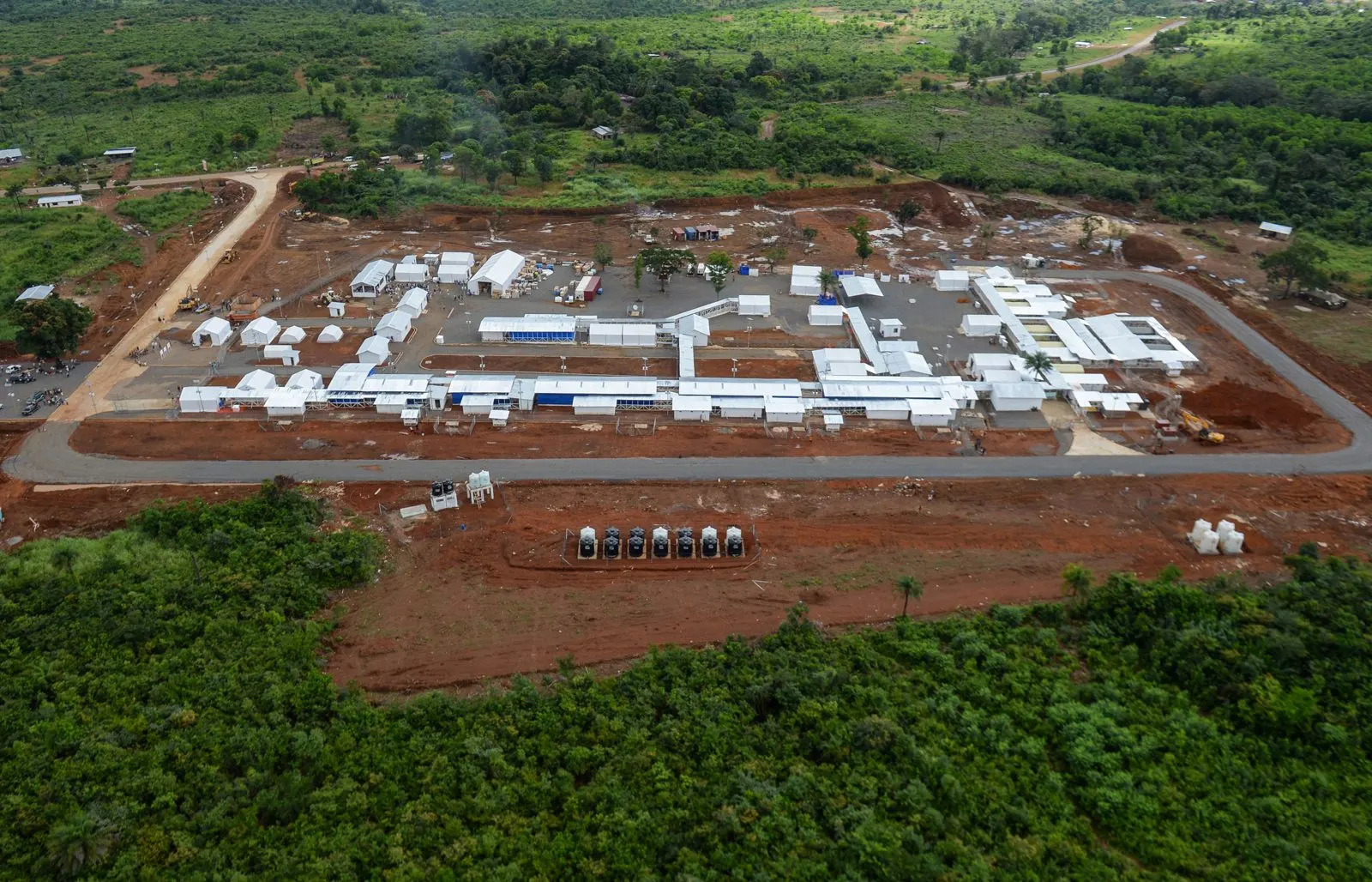 Protective equipment and facilities at an Ebola treatment centre, a file photograph from an earlier outbreak.
Credit: PO (Phot) Carl Osmond, UK Ministry of Defence, via Wikimedia Commons, Open Government Licence v1.0. File photograph, not the Bafwasende site.
When an attack forces a team to withdraw, surveillance stops and contacts go untraced. Supplies do not reach clinics. People who are sick may stay at home rather than seek care, and the virus can pass silently within households and villages. The WHO has warned repeatedly that fear and false information can encourage attacks on medical staff and undermine public cooperation with disease control measures, a warning that the Bafwasende killing has made painfully concrete. Further reporting on the attack notes that local authorities had not commented on suspects, while Tribune Online put the cumulative toll at more than 9,800 cases and over 4,700 deaths.
Readers can find more coverage of global health stories on the Verity homepage, where outbreak reporting sits alongside the day's other major developments.
Uganda tightens its border
Neighbouring Uganda has responded to the growing outbreak by banning non-essential travel to and from DR Congo. Citizens returning from DR Congo face a 21-day quarantine, matching the longest known incubation period for Ebola. Only essential travellers, including aid workers, truck drivers and security staff, may cross, and they are subject to strict screening.
The measures reflect the difficulty of containing a virus that crosses borders along trade routes, family ties and migration paths. Uganda has dealt with Ebola outbreaks of its own in the past, and its health system has experience of screening at border points. But a quarantine rule only works if travellers come forward, and that in turn depends on trust in the authorities imposing it.
For Uganda, the balance is delicate. Closing the border entirely would cut off trade and aid, while leaving it open risks importing cases. The compromise chosen, essential travel only with screening, plus quarantine for returning citizens, is designed to slow any cross-border spread without shutting down the movement that border communities depend on.
The Verity news section will continue to follow border measures and case figures as they are updated by the health ministry and the WHO.
Why health workers are being targeted
Attacks on health workers during disease outbreaks are not new, and they rarely have a single cause. In eastern DR Congo, several pressures meet at once. Armed conflict and weak state services have left many communities wary of outsiders. Past Ebola responses, sometimes run with heavy security and limited local consultation, left a legacy of suspicion. Rumours spread quickly where formal information is scarce, and in some places the arrival of a response team in protective clothing is read as a sign of danger rather than help.
The WHO and partner organisations have tried to change that approach, moving to a village-centred model that puts local leaders and community health workers at the front of the response. The idea is that messages carry more weight when they come from people the community already trusts. But that shift takes time, and it has itself met resistance in places where Ebola is dismissed as a hoax or where residents believe responders bring the disease with them.
What is clear is that violence against health workers does not stay contained to a single incident. It sends a message to other staff, to volunteers and to the communities they serve. Some workers refuse postings in areas seen as dangerous. Others go, but with less time in villages and more time travelling under escort. Either way, the response slows, and a virus that thrives on delay gains ground.
The about page explains Verity's approach to reporting sensitive stories of this kind, with strict attribution and care for the people at the centre of them.
What happens next
The immediate questions after the Bafwasende attack are practical ones. Will the injured health worker recover, and will the response team return to the area? Will local authorities investigate and name those responsible? And will the village-centred approach, still new in parts of the outbreak zone, be able to rebuild enough trust for teams to work without fear?
Longer term, the outbreak will be judged by whether case numbers fall and whether the Bundibugyo trials produce a vaccine or treatment that can be deployed at scale. Until then, the tools available are the familiar ones: finding cases early, tracing contacts, isolating patients safely, and persuading communities that the people in protective clothing are there to help.
The WHO statement carried a simple plea, and it is worth repeating in full because it captures what is at stake. Health workers, the director-general said, must be able to work in dignity and safety. In Bafwasende, that basic condition was not met, and a nurse who went to answer an alert did not come home.
Anyone with questions about Verity's coverage can reach the team through the contact page.