A channel that became a campaign
For years, one of the most durable facts of Brazilian politics was that the online battlefield belonged to the right. Supporters of Jair Bolsonaro built vast networks on WhatsApp and Telegram, sharing videos, memes and talking points at a speed and scale that Lula's camp struggled to match. In the final three weeks of the 2026 presidential race, that imbalance was turned on its head by a single WhatsApp channel, run by a congressman, that grew to 10.8 million followers and gave Lula's campaign a digital machine it had never possessed before.
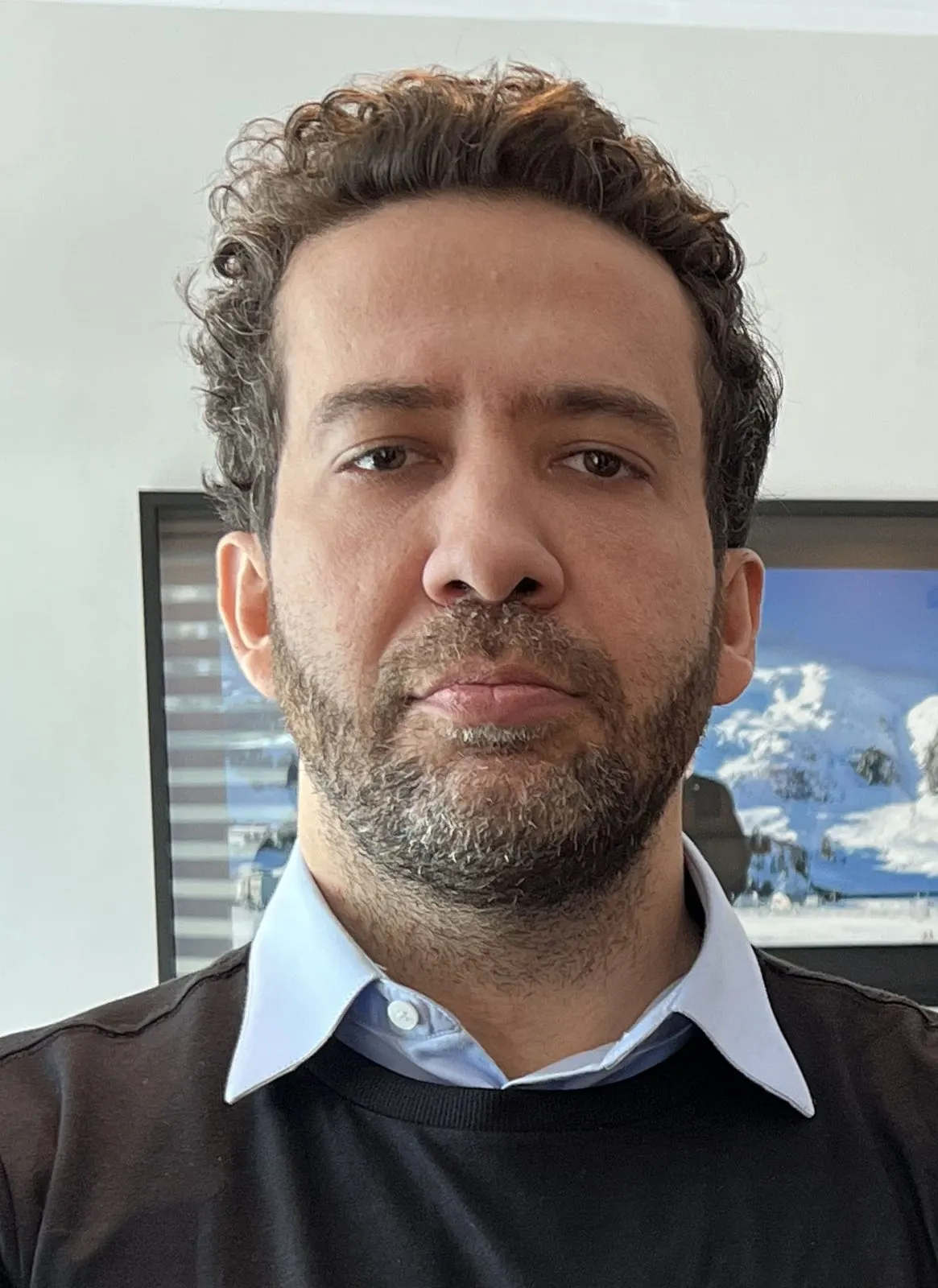
The channel was called Lula's Army, or Exercito do Lula in Portuguese, the BBC reported. Its leader was Congressman Andre Janones, a federal deputy from Minas Gerais who had previously been kept at arm's length by Lula's inner circle. After the first round of voting, in which Lula finished behind Flavio Bolsonaro, Janones took charge of the digital effort without waiting for the formal campaign structure to reorganise itself. He set himself up, in effect, as the general of a volunteer army, and his followers responded in numbers that surprised even seasoned campaigners.
The scale of the growth was extraordinary. The channel had only about 50,000 followers before the first round, according to the World Today Journal. By 20 October it had reached about 6 million, by 21 October it had passed 7 million, and by Friday 23 October it had crossed 10 million, according to Particle's tracking. By the time of the vote it stood at 10.8 million followers, making it one of the largest political mobilisation channels in Brazilian history. The rival channel supporting Flavio Bolsonaro, known as Tropa do Flavio, had roughly 2.1 million followers by comparison, News One USA reported.
This article is about that machine: how it worked, why it mattered, and what it says about the way elections are now fought. The result itself, Lula's victory in the runoff, is covered separately. What matters here is the mechanism, and the mechanism was Janones.
Missions, templates and a 24-hour livestream
The channel's method was simple, and that simplicity was the point. Each day, Janones sent his followers ready-made material: texts, audio clips, images and videos that they could copy, forward and post on other platforms. Alongside the material came instructions, framed as missions, telling followers exactly what to do: share a particular video, push a particular hashtag, recruit a friend, or carry out a targeted search on Google using specific terms.
The missions were designed to be easy to complete and satisfying to share. A follower did not need to write an argument or make a video of their own. They needed only to take the day's material and pass it on, and to do so at the same time as millions of others. That coordination was the key. When millions of people post the same hashtag or search the same term within a short window, the content rises in the rankings of social media and search platforms, reaching people who never joined the channel at all.
Janones drove the effort with a stream of recruitment targets and deadlines. He set successive goals for follower numbers, paused posting to push supporters to recruit more members, and celebrated each milestone as it was passed. The urgency was deliberate. Messages used pressing language to keep followers active, and the pace never let up across the three weeks between rounds.
The climax came on the eve of the election, when Janones hosted a 24-hour livestream billed as a turnaround event. The broadcast kept supporters engaged through the final night of the campaign, gave them fresh material to share, and provided a focal point for the energy the channel had built. It was, in effect, a closing rally held entirely on phones, and it capped a campaign that had been run as much through a messaging app as through television studios and street rallies.
Reversing a long-standing imbalance
The significance of the channel becomes clear only against the history it reversed. For years, conservatives aligned with Jair Bolsonaro had dominated WhatsApp and Telegram in Brazil. Their networks were larger, faster and better organised than anything the left could field, and they used that advantage to set the terms of online debate, spread attacks on opponents and mobilise supporters at short notice. Lula's campaign, by contrast, had often seemed slow and formal online, better at press conferences than at the rapid-fire exchange of a messaging group.
Lula's Army changed that calculation. For the first time, Lula's supporters had a channel that could match the right's networks for speed and scale, and that could push its own messages into the feeds of undecided voters. The channel did not only distribute content. It coordinated mass actions, including calls for followers to conduct coordinated Google searches using specific terms critical of Flavio Bolsonaro, in an attempt to influence what the platform surfaced to other users.
Political scientist Denilde Holzhacker credited a shift in campaign strategy, intensified local efforts and messaging that linked a Bolsonaro win to concerns about social programmes and rights. Sociologist Mayra Goulart said social media combined with street mobilisation reduced abstention and persuaded undecided voters. Both assessments point to the same conclusion: the digital effort mattered, but it mattered because it was paired with work on the ground, in neighbourhoods and at polling stations, rather than replacing it.
That caution is important. Analysts warn that raw follower totals do not show how many people actually carry out coordinated tasks, or how far those tasks translate into votes. A channel with 10.8 million followers does not mean 10.8 million active campaigners, and measuring the exact effect of any single online effort on a national vote is extremely difficult. What can be said is that the channel gave Lula's campaign something it had lacked: a fast, large and disciplined digital operation in the final weeks, at exactly the moment when the race was decided.
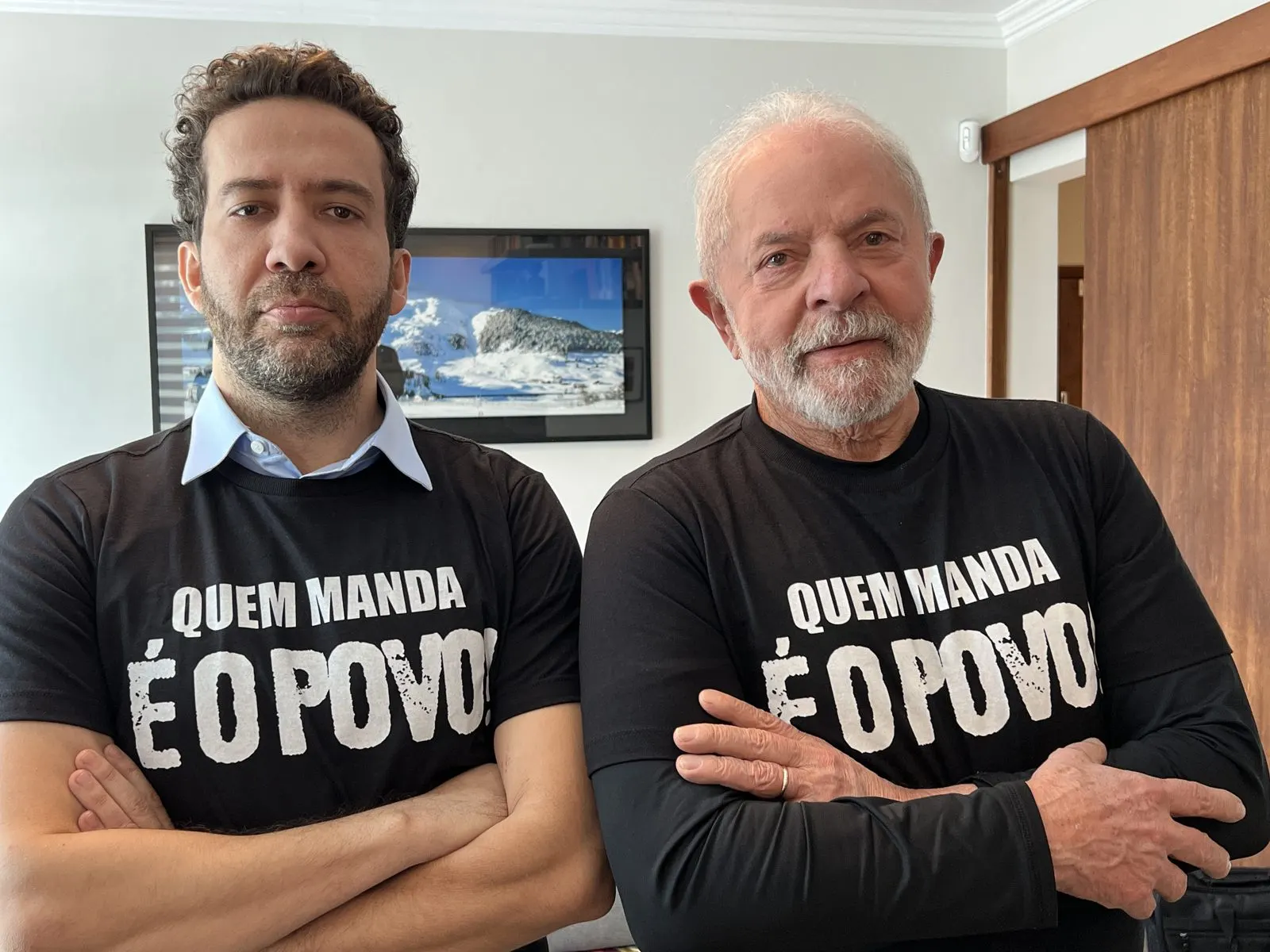 Luiz Inacio Lula da Silva with Andre Janones at a campaign event in August 2022
Credit: Lula Oficial, via Wikimedia Commons, CC BY-SA 4.0.
A legal fight over the channel itself
The channel's success also drew it into a legal battle that ran alongside the campaign. Flavio Bolsonaro's campaign asked Brazil's Superior Electoral Court to suspend the channel on 7 October, accusing Janones of coordinating mass disinformation. The court's president, Kassio Nunes Marques, ordered the channel to be taken down and separately suspended a paid Lula advertisement, citing a lack of minimum evidentiary support for its claims.
The takedown did not hold. Other members of the tribunal overturned the suspension, and the channel continued to operate. Days before the vote, Justice Floriano de Azevedo Marques issued an injunction preventing the court presidency from using administrative measures to suspend or restrict the channel, as covered by El Ciudadano until the full court or a competent judicial panel had ruled. The electoral prosecutor's office later filed an opinion arguing that coordinated posting by real users does not by itself prove illicit amplification, and recommended rejecting most of the requests to suspend the channel. Meta and Google told the court they had found no signs of automated traffic or policy breaches in material tied to the channel.
The dispute highlighted a difficult question for electoral authorities everywhere: where is the line between a supporter network and a coordinated manipulation machine? A channel run by a politician, with millions of real followers who choose to share its content, looks very different from a network of automated accounts. But when those followers are instructed to search specific terms or flood a hashtag at the same moment, the effect can resemble the artificial amplification that platforms claim to police. The court's eventual answer, that real supporters acting together are not by themselves unlawful, will shape how future campaigns in Brazil use messaging apps.
There were other controversies. X reported heavy coordinated activity across 58 hashtags linked to the campaign, producing about 8.2 million posts from roughly 476,000 accounts, and said it suspended 12,454 accounts it judged potentially inauthentic. Lula's team had also complained to the court that Meta was suppressing its content while amplifying Bolsonaro's, a claim Meta denied, describing the problems as technical incidents. None of these disputes has produced a final ruling that the channel itself broke electoral law, but they show how closely the machinery of a modern campaign is now watched by courts, platforms and opponents.
What Lula's Army means for the next campaign
In his victory speech, Lula called Janones his General and thanked him for raising morale daily. The praise was more than a courtesy. It was a public acknowledgement that the campaign's digital wing had become central to its identity, and that Janones, once an outsider, had earned a place at the centre of Lula's political project. Lula has also pledged to give the public a greater say in decision-making and to give digital communication a bigger role in his government, promises that suggest the lessons of the channel will not be forgotten.
For other campaigns, the lesson is equally clear. A messaging app channel, run with discipline and a simple set of tasks, can rival the reach of a television campaign at a fraction of the cost. It can also be built quickly, as Janones showed, going from a small base to millions of followers in weeks when the message and the moment align. The risk, for democracy as a whole, is that the same machinery can be used to spread falsehoods as easily as to spread a campaign video, and that the line between enthusiasm and manipulation is drawn by platforms and courts after the fact rather than before it.
The next Brazilian election will be fought with Lula's Army as a precedent. Other politicians will try to copy it, opponents will try to counter it, and electoral authorities will try to regulate it. The channel itself may fade, or it may become a permanent part of Lula's political organisation. Either way, the three weeks in October 2026 showed that in Brazil, as in many democracies, the decisive campaign is now fought as much in a chat group as on a stage.
More on Brazil and world politics can be found on the homepage, with background on the site at the about page. The technology section follows how messaging platforms shape elections, and the politics section covers democratic debates elsewhere.