A fourth term, and a comeback nobody had predicted
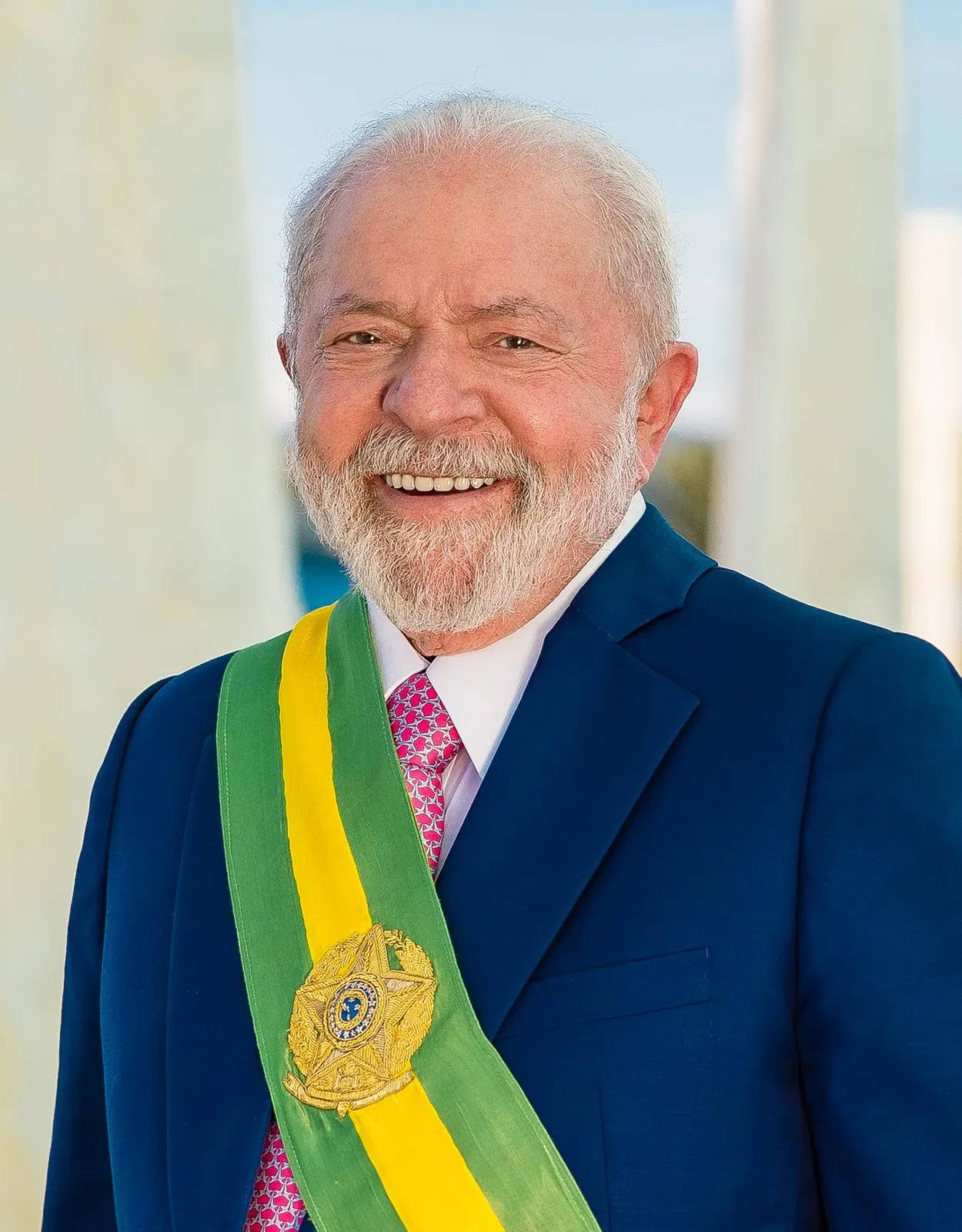
Brazil's President Luiz Inacio Lula da Silva has won a fourth term in office, completing one of the most striking comebacks in the country's recent political history. Lula, who turns 81 on Tuesday, took 51.79% of valid votes in Sunday's runoff against 48.21% for Senator Flavio Bolsonaro, son of convicted former president Jair Bolsonaro. The margin, confirmed by Brazil's Superior Electoral Court and reported by The Statesman, was about 4.4 million votes.
The result makes Lula the first president in Brazilian history to secure a fourth term, the BBC reported. His new term runs to 2030 and begins on 5 January. It also breaks a long-standing pattern in Brazilian politics: since the country returned to direct presidential elections in 1989, no candidate who finished second in the first round had ever gone on to win the runoff. Lula did exactly that, overturning a first-round deficit to beat a rival who had led the field three weeks earlier.
In the first round on 4 October, Flavio Bolsonaro finished ahead with about 47.03% of valid votes against Lula's 45.16%, according to the Indian Express. Neither candidate won the outright majority needed to avoid a runoff, so the contest went to a second round on 25 October. The turnaround between the two rounds was driven, according to Lula's camp, by a determined push on turnout after 33 million voters abstained in the first round. Sunday saw the largest drop in abstention between rounds of a presidential election, a shift that Lula's team had targeted directly.
Speaking to crowds after the result, Lula said this fourth term would be the best of any president in the country's history. Vice-President Geraldo Alckmin said Lula had saved Brazilian democracy for a second time, a reference to his earlier return to power after his own period out of office. Congratulations came from Ecuador's President Daniel Noboa, European Commission President Ursula von der Leyen and South African President Cyril Ramaphosa, among others.
How the runoff was won
The campaign's final three weeks were dominated by turnout. Lula's team, having watched a third of the electorate stay home in the first round, poured its energy into getting supporters to the polls, with a particular focus on voters in Sao Paulo and Bahia. The strategy was not only about persuading undecided voters, but about finding people who already supported Lula and making sure they actually cast a ballot.
That focus mattered because the first-round numbers suggested a narrow but real lead for Bolsonaro. Flavio Bolsonaro had campaigned on concerns about the cost of living, taxation, corruption and public security, themes that resonated with voters frustrated by prices and crime. Lula, by contrast, defended his administration's social policies and appealed to voters who favoured continuity, while promising greater public participation in government decision-making.
The final result, a swing of several percentage points between rounds, was enough to reverse the first-round order. It also ran against a regional trend that had seen right-wing candidates win seven consecutive presidential elections across Latin America, a run that Lula's victory has now interrupted. For supporters, the result was proof that the left could still win a national contest in a region that had been moving right. For opponents, it was a narrow win in a deeply divided country, with a conservative Congress and a large opposition vote to contend with.
For readers following world politics, the Brazilian result also matters beyond Brazil's borders. The country is Latin America's largest economy and a major voice in debates about trade, climate and regional security. A fourth Lula term will shape Brazil's relationships with the United States, Europe and its South American neighbours, and the new term's opening weeks will be watched for signals about how he plans to govern with a divided legislature.
The dispute over extended voting hours
The result has not been accepted by the losing candidate. Flavio Bolsonaro has so far refused to concede and has called for the runoff to be annulled, citing a last-minute decision to extend voting hours on Sunday evening. In an unprecedented move, polls were extended by two hours after Lula's team argued that voters in Sao Paulo and Bahia could not reach polling stations, pointing to reduced bus services and failures in free public transport in several states. The Supreme Court issued the decision just as polls were due to close.
Flavio Bolsonaro told journalists it was impossible to recognise the result given the circumstances in which it unfolded, Christian Daily reported. His campaign argued that the extension changed election procedures during voting and undermined the legitimacy of the outcome. He did not present evidence that the decision had altered the result, according to reporting of his remarks.
The picture is more complicated than either campaign's account suggests. Both campaigns had, in fact, asked for additional voting time, although for different reasons. Lula's representatives pointed to transport shortages, while Bolsonaro's campaign raised concerns about heavy rain, flooding and power outages at polling places in Minas Gerais and Rio Grande do Sul. The extension, authorised by Supreme Court Justice Cristiano Zanin, applied only to polling stations that were still open when the order was issued. Stations that had already closed did not reopen.
Supreme Court President Kassio Nunes Marques, who was appointed by the older Bolsonaro, confirmed Lula's victory. Electoral law experts told BBC Brasil that the chances of annulment were remote, citing Lula's margin of victory and the fact that both campaigns had sought an extension. The Superior Electoral Court subsequently confirmed the result, despite Bolsonaro's objections, as reported by Africanian.
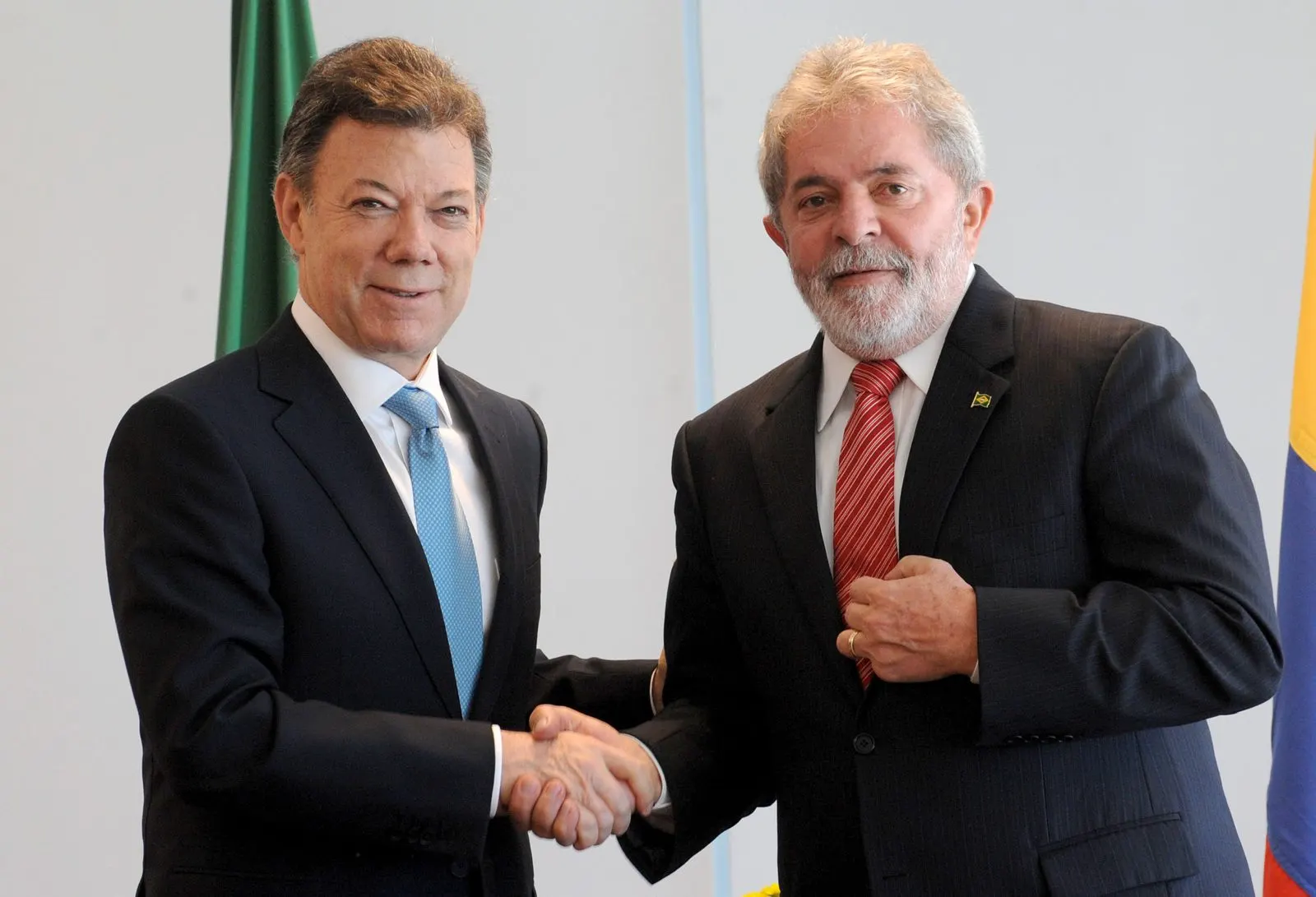 Luiz Inacio Lula da Silva with former Colombian president Juan Manuel Santos
Credit: Wilson Dias, Agencia Brasil, via Wikimedia Commons, CC BY 3.0 Brazil.
The road to 5 January
Between the runoff and the inauguration, two tracks will run in parallel. The first is legal. Flavio Bolsonaro's team has said it will seek annulment, and the electoral court will have to deal with that request through its normal process. The experts quoted by BBC Brasil were clear that the chances of success look remote, but the challenge itself will keep the dispute in the headlines and test how Brazil's institutions handle a losing candidate who refuses to concede.
The second track is political. Lula's team must prepare a government while negotiating with a Congress that leans conservative, and the composition of his cabinet will be read as a signal of how he intends to govern. Vice-President Geraldo Alckmin, who stood beside him through the campaign, will be central to that work, and the congratulations from foreign leaders suggest that Lula's return is being welcomed abroad even as it is contested at home. The weeks before 5 January will show whether the country can move from a bitter campaign to a functioning transition.
A divided country faces a new term
Whatever the legal challenge brings, Lula will take office in January facing a country that remains deeply divided. He won with just under 52% of valid votes, leaving nearly half the electorate having voted for his opponent. Congress, elected by Brazilians alongside the presidential contest, leans conservative, which will constrain his ability to pass legislation. The cost of living and public security, the issues that powered Bolsonaro's campaign, will not disappear with the election result.
Lula's promise to make people participate more in decision-making is, in part, an answer to that division. His campaign argued that a more open style of government, with greater public involvement, could rebuild trust in institutions that have been strained by years of polarised politics. Whether that approach can bridge a gap of 4.4 million votes, in a country where the two camps view each other with deep suspicion, is the central question of the new term.
The international reaction also reflected the stakes. Leaders who congratulated Lula framed the result as a win for democratic continuity in the region's largest democracy. The result was also read as a setback for efforts to expand Washington's influence in the region, given the close alignment between the Bolsonaro movement and the current US administration. Brazil's foreign policy in the coming term, including its positions on trade and on regional security, will be shaped by that context.
For Lula himself, the fourth term is a remarkable personal story. He has now served three non-consecutive terms before this one, and his return to the presidency after a period out of office was already one of the great comebacks of recent Brazilian politics. To add a fourth term, after trailing in the first round, extends that story further. He told supporters this term would be his best. The test of that claim will come in the months after 5 January, when the campaign promises meet the realities of governing a divided country.
Further coverage of Brazil and Latin America can be found in the world section, and the homepage carries the latest stories. Background on the site is available on the about page, and the politics section follows election disputes and democratic debates elsewhere.