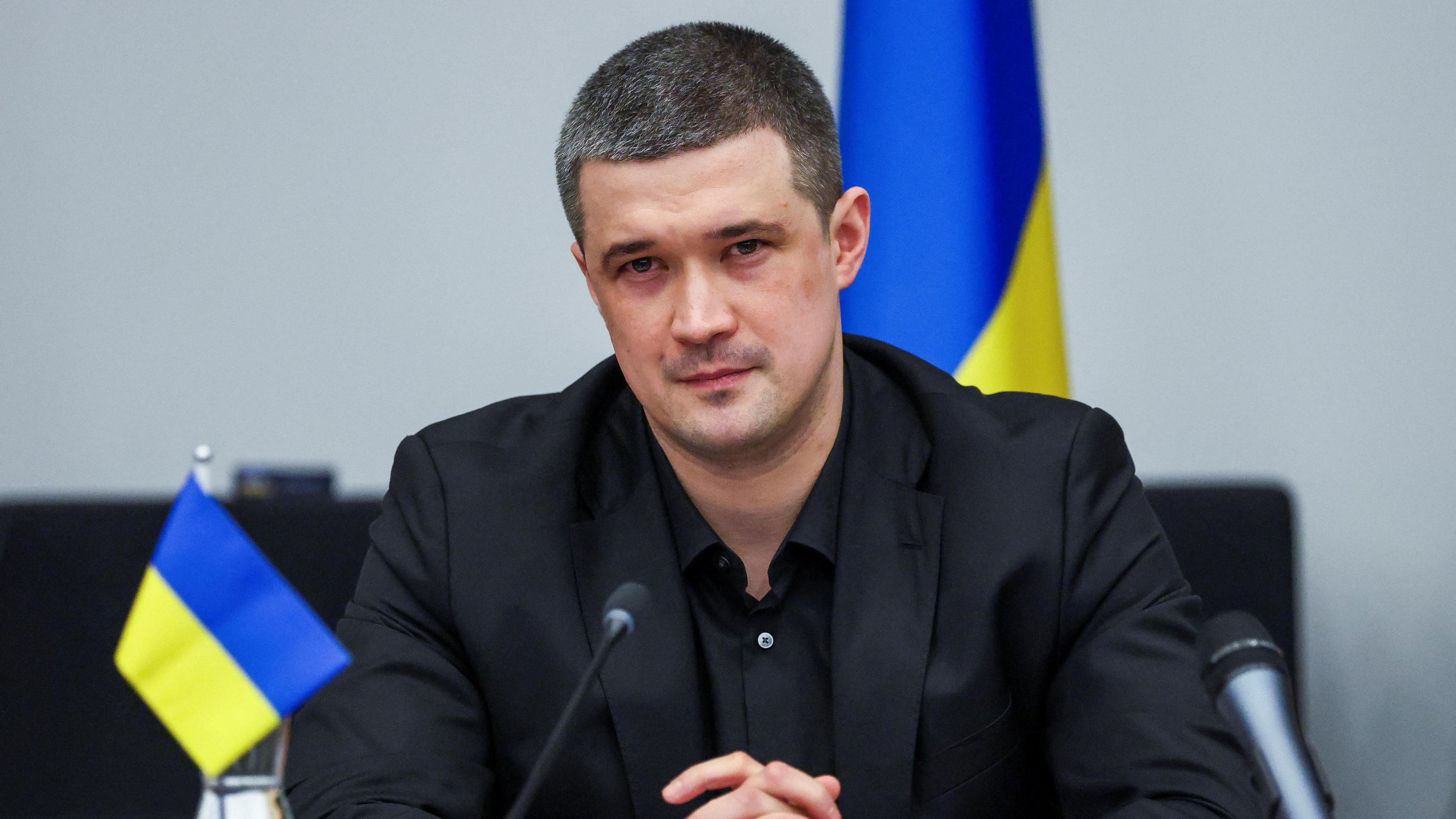
Fedorov Calls for Elections Despite Ongoing War
Ukraine’s political landscape has entered a new phase after former defence minister Mykhailo Fedorov publicly called for the restoration of a democratic electoral process while the country remains at war with Russia.
In a video published on Tuesday, Fedorov argued that democracy should not be prevented by the country’s wartime circumstances. He said Ukraine is fighting to remain a free European state and therefore needs a way to preserve democratic institutions even during a prolonged conflict.
His remarks are significant because Ukraine has remained under martial law since Russia launched its full-scale invasion in February 2022. Under the current legal framework, national elections cannot take place while martial law remains in force.
Fedorov did not directly name President Volodymyr Zelensky in his address, but his call for elections is widely viewed as a challenge to the political status quo surrounding the Ukrainian president.
Ukraine’s elections have been suspended because of the continuing state of martial law.
The measure was introduced following Russia’s full-scale invasion and has remained in place as the war continues. Martial law gives the government expanded powers and restricts certain normal political and civil processes, including the holding of national elections.
The issue has become increasingly complicated as the conflict has continued for years.
Holding an election during an active war would present major practical and security challenges. Millions of Ukrainians have been displaced, some areas remain occupied by Russia, and military personnel are serving across the country and abroad.
Fedorov nevertheless argued that Ukraine needs to develop a mechanism that could allow the country to return to a full democratic process while maintaining national security.
He described the situation as requiring a “legal, safe, and realistic mechanism” for restoring elections.
The former minister’s comments come shortly after his unexpected removal from the defence ministry.
Fedorov was appointed defence minister only months earlier and had gained attention for his focus on technology, innovation, military procurement and data-driven approaches to Ukraine’s war effort.
His dismissal generated political controversy and protests, adding to pressure on President Zelensky.
Fedorov has also reportedly rejected alternative government positions offered to him, maintaining that he would only return to the defence ministry.
His latest public intervention therefore carries political significance beyond the question of elections.
Rather than announcing a personal political campaign, Fedorov focused his message on Ukraine’s democratic institutions and what he described as a broader crisis of governance.
In his address, Fedorov also raised concerns about corruption and what he called a systemic crisis of governance.
Corruption has been a longstanding political issue in Ukraine, and efforts to strengthen transparency and accountability have become particularly important during the war.
The Ukrainian government depends heavily on international military, financial and political support. Maintaining confidence among domestic citizens and foreign partners requires institutions capable of demonstrating accountability and effective administration.
Fedorov argued that Ukraine cannot allow fear of political change to prevent reforms.
His comments could therefore contribute to a wider debate about how Ukraine should balance wartime security with democratic accountability.
Before becoming defence minister, Fedorov was known for his work in Ukraine’s technology and digital government sector.
Following Russia’s full-scale invasion, he became associated with several technology-focused initiatives supporting Ukraine’s war effort.
He helped establish the volunteer IT Army of Ukraine, which mobilised technology specialists during the early stages of the invasion. He was also involved in the Army of Drones fundraising initiative, which helped expand Ukraine’s use of unmanned aerial systems.
His approach to warfare emphasised technology, innovation and rapid decision-making.
As defence minister, those priorities continued through an increased focus on drones, high-tech military capabilities and procurement.
His technology background made him one of the more recognisable figures in Ukraine’s efforts to modernise its military response to Russia.
Fedorov’s political intervention comes as the war continues to develop on multiple fronts.
Ukraine has intensified its long-range drone operations against targets inside Russia. Recent attacks have reportedly targeted infrastructure, oil facilities, warehouses and other strategic locations.
Russian officials have described some of the attacks as among the largest drone operations against Moscow and surrounding areas since the beginning of the full-scale war.
Ukraine has increasingly relied on long-range unmanned systems as part of its strategy to strike targets beyond the immediate battlefield.
The expansion of drone warfare reflects the broader technological transformation of the conflict, an area in which Fedorov has previously played a prominent role.
The political debate in Kyiv is unfolding alongside continued Russian and Ukrainian attacks.
Russian strikes on Ukrainian territory have continued to cause civilian casualties and damage, while Ukrainian forces have carried out increasingly ambitious attacks inside Russia.
Recent attacks on both sides have resulted in deaths and injuries, demonstrating that the war remains highly active despite ongoing international efforts to find a path toward peace.
For Ukraine, this creates a difficult political dilemma.
The country must maintain its military response while also preserving democratic institutions and public confidence in government.
Fedorov’s call does not automatically mean that elections will take place.
For a national election to proceed, Ukraine would first need to address the legal restrictions associated with martial law. Authorities would also have to determine how voting could safely take place in areas affected by fighting, occupied territories, and displacement.
Millions of Ukrainians have been forced from their homes since the invasion, creating additional logistical challenges for any nationwide vote.
There would also be questions about voting by military personnel and citizens living abroad.
Security would be another major concern. An election during an active conflict could provide opportunities for Russian interference, cyberattacks, disinformation campaigns, and physical disruption.
These challenges mean that any future election process would require extensive legal, logistical and security preparations.
Fedorov’s intervention highlights a question that Ukraine is likely to face for as long as the war continues: how can a democratic country protect its institutions while fighting an existential military conflict?
Ukraine has repeatedly presented its struggle against Russia as a defence of sovereignty, independence and European democratic values.
That makes the issue of elections particularly sensitive.
Supporters of wartime elections could argue that maintaining democratic legitimacy is essential, especially during a prolonged conflict.
Opponents could counter that holding an election while the country is under attack could create serious security risks and potentially undermine the integrity of the vote.
Finding a balance between these competing priorities will likely remain one of Ukraine’s most difficult political challenges.
Fedorov’s comments do not necessarily signal an immediate political campaign against Zelensky.
However, his position could encourage greater public discussion about Ukraine’s political future and the conditions under which elections should eventually be held.
Zelensky has remained the central political figure in Ukraine throughout the full-scale war, but the continuation of martial law means that the country’s normal electoral cycle has been disrupted.
As the conflict enters a prolonged phase, questions about political succession, democratic legitimacy and government accountability are likely to become increasingly important.
Fedorov’s call places those questions directly in the public debate.
Ukraine’s immediate priority remains its war effort, but the country’s political future is becoming an increasingly important part of the national conversation.
Fedorov has called for a system that would allow democratic processes to resume safely and legally despite the continuing conflict.
Whether such a mechanism can be created will depend on Ukraine’s security situation, domestic legislation and political consensus.
For now, national elections remain suspended under martial law. But Fedorov’s intervention could mark the beginning of a much broader debate over how and when Ukraine should return to normal democratic politics.