The statement that shook Merseyside
Everton are officially on the market. On Friday morning, The Friedkin Group (TFG) released a carefully worded 170-word statement, first reported by BBC Sport, that effectively invited offers for the club less than two years after it bought control of the Toffees in a deal believed to be worth in excess of £400m. "The Friedkin Group is exploring new investment options for Everton Football Club, including the potential sale of a controlling interest," the statement read. The group added that, with the club's long-promised new stadium completed and a foundation of stability in place, "the time is right to consider the next chapter for Everton."
The announcement landed as a genuine shock. When TFG completed its takeover from Farhad Moshiri in December 2024, it was presented as the beginning of a long-term project: the end of years of financial turbulence, points deductions and boardroom chaos. Instead, after one full season and a turbulent summer transfer window, the American owners have decided to test the market — making Everton one of the most significant clubs to be put up for sale in English football in recent memory.
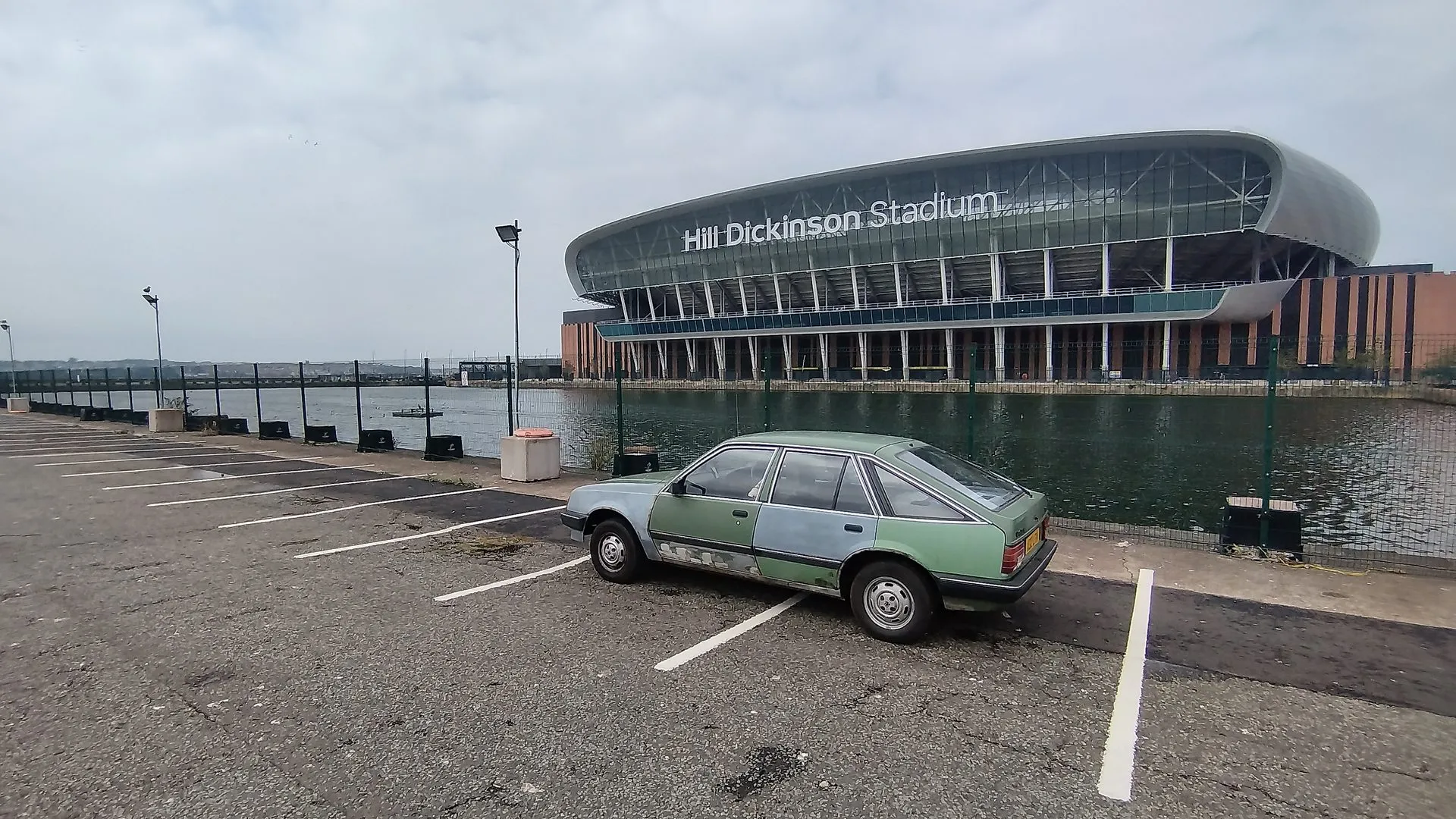
 The new Everton Stadium at Bramley-Moore Dock in Liverpool, completed under Friedkin Group ownership.
Credit: Photo by silver-novice, CC BY 2.0, via Wikimedia Commons
A tenure that never found its footing
From the start, TFG's ownership of Everton felt remote. Chairman Dan Friedkin, who is based in Houston, outlined a vision of a "sustainable and successful" future when the takeover was completed, but the day-to-day running of the club was left largely to his son-in-law, Rishi Majithia, working alongside chief executive Angus Kinnear. For supporters, the distance between the ownership and the football club was more than geographic.
That distance became public in September, when manager David Moyes admitted he had never met or spoken to Friedkin since returning as manager in January 2025. For a club that prides itself on being the "People's Club," the revelation that its chairman had no direct contact with its manager struck an uncomfortable chord. The disconnect fed a growing sense among fans that Everton was being run as an asset on a balance sheet rather than a football institution — a criticism that would explode during the summer transfer window.
The Armstrong deal that became the tipping point
The catalyst for the sale announcement was a transfer saga that laid bare the tensions between the ownership and the fanbase. Late in the summer window, news broke that Everton had accepted a £40m bid from Nottingham Forest for Harrison Armstrong, the 19-year-old England Under-19 midfielder regarded as one of the finest products of the club's academy in years. The fee, plus a future sell-on clause, represented pure profit on the books — and supporters saw it exactly that way.
The backlash was immediate and fierce. Travelling Evertonians chanted Armstrong's name throughout a 1-1 draw at Bournemouth, explicitly demanding that the hierarchy reject the deal. Manager David Moyes weighed in, telling reporters after the match: "You always have to consider supporters; supporters aren't always wrong... I don't think we can afford to lose any players, certainly not our better ones." Over the weekend that followed, the club's board made a unanimous decision to pull the plug on the negotiations, as ToffeeWeb reported at the time, reaffirming Armstrong's status as a core homegrown asset. The U-turn saved the player but exposed the fault line: the owners had been willing to sell a prized local talent, and only a fan revolt had stopped them.
A summer of profit over promise
The Armstrong episode was the sharp end of a transfer window that left supporters seething. Everton sold roughly £100m worth of talent over the summer while recording a net profit of around £25m from their transfer activity — an outcome fans read as commercial caution rather than ambition. Star winger Iliman Ndiaye departed for Manchester City in a £65m deal, striker Beto was sold to Fiorentina, and a proposed £45m move for Monaco forward Folarin Balogun collapsed.
By the time the window shut, the squad was down to just 18 senior players, and the only deadline-day arrival was Ainsley Maitland-Niles from Lyon for around €5m. After Beto's exit, 23-year-old Frenchman Thierno Barry was left as the club's only recognisable senior striker. Everton also raised season ticket prices for the 2026-27 campaign, with the average supporter facing a £45 increase — a move that landed badly in a cost-of-living squeeze.
None of this is to say the Friedkins failed entirely on the pitch. Everton finished an underwhelming 13th in the Premier League last season but are one of only five top-flight sides still unbeaten after five games this term, sitting seventh — level on points with neighbours Liverpool — on two wins and three draws ahead of a trip to Hull after the international break. The question now is whether a sale process will unsettle that promising start.
"Not the corporate club now"
The reaction from supporters has been a mixture of relief, anger and dark humour. Everton legend Neville Southall captured the mood on X, writing: "Maybe Everton will go back to being the People's club, not the corporate club now" — a reaction documented by fan outlet Goodison News. The sentiment reflects a widespread belief that TFG treated the Hill Dickinson Stadium as a financial opportunity rather than a footballing fortress — a charge the owners' transfer dealings only reinforced.
Fan groups have long argued that the club's identity is rooted in its community, and the last two years have tested that faith. The points deductions and financial instability of the Moshiri era were followed by stability under TFG — but stability without ambition, many supporters concluded, was not enough. The £25m transfer profit in a single window, the Armstrong saga and the ticket price rises combined to paint a picture of an ownership group managing a spreadsheet rather than chasing success.
What comes next for the Toffees
TFG has been careful to stress that there is no fire sale. Its statement said the group would only entertain interest from parties it believes could act as the right custodians and build on the progress made during its ownership, adding that it would "support the club in all ways necessary to achieve success on the pitch" while any process runs. There is no indication the owners are seeking an immediate exit, Football Today reports; any sale would depend on finding an investor willing to sustain the club's finances and push for long-term Premier League progress. Any deal would also be scrutinised under the Premier League's owners' and directors' test — part of the tightening governance of European football.
The Friedkins' wider sporting portfolio — which includes Roma and AS Cannes, plus a reported pursuit of an NHL franchise in Houston valued at around $3.5bn — suggests a group that buys big assets and is not afraid to move them on. For Everton, the next owner will inherit a club in far better shape than the one TFG bought: a finished world-class stadium, Premier League stability and a promising young core. Whether that attracts the "right custodian" the group promises to wait for remains the defining question of this new chapter — one that supporters, having been burned before, will watch with understandable wariness. Stay with veritynewspaper.com for continuing coverage of this story.