
Sentence passed at Southwark Crown Court
US singer Chris Brown has been given an eight-month prison sentence, suspended for 12 months, over an attack at a London nightclub more than three years ago, as reported by the BBC. The 37-year-old was sentenced at Southwark Crown Court on Monday after pleading guilty in July to affray, a charge covering unlawful violence that causes others to fear for their safety. Because the sentence is suspended, Brown will not go to prison now, but the term hangs over him for a year and can be activated if he commits a further offence in that time.
Brown's vocal coach, Omololu Akinlolu, 40, was sentenced alongside him to four months, also suspended for 12 months. Both men were ordered to pay £1,500 in costs. The case centred on an incident in the early hours of 19 February 2023 at the Tape private members' club in Hanover Square, Mayfair, where Brown attacked music producer Abraham Diaw, a former friend. The attack lasted around 20 seconds, according to court reporting, and was captured on video shown to the court.
Judge Tony Baumgartner, passing sentence, described the violence in blunt terms. He said: "The repeated use of a glass bottle in that way, especially aimed at the head, was plainly dangerous." He added that the attack carried the risk of a more serious injury than was ultimately sustained, and he told Brown that his fame, commercial success and professional standing did not entitle him to special treatment, saying the law applies equally to everyone.
What happened at the Tape club
Prosecutors described the attack as vicious and unprovoked, according to Reuters reporting. The court heard that Brown struck Diaw twice on the head with what was described as a heavy, square shaped tequila bottle, then swung the bottle at him twice more as he turned away. Akinlolu was seen grabbing Diaw in a bear hug before he fell to the ground. Video footage played in court showed Brown having to be pulled away from the victim. Diaw needed hospital treatment and was discharged with a head injury diagnosis and a superficial knee injury.
Brown and Akinlolu had originally faced more serious charges, including attempting to cause grievous bodily harm, assault causing actual bodily harm and having an offensive weapon. Those charges were dropped after the pair pleaded guilty to affray. The judge said the violence was serious and public, but that Brown did not qualify for an immediate custodial sentence because he had pleaded guilty and there were several mitigating circumstances, including stable employment and charity work. The judge acknowledged Brown's previous convictions but said he had maintained a clean record in recent years, as reported by CNN.
Some of Brown's fans queued outside court from around 7am, about an hour before the building opened. Brown, who wore a black leather jacket in court and spent much of the hearing looking at the floor, thanked the judge before leaving the dock and nodded toward his supporters in the public gallery. Fans cheered as he walked free from court.
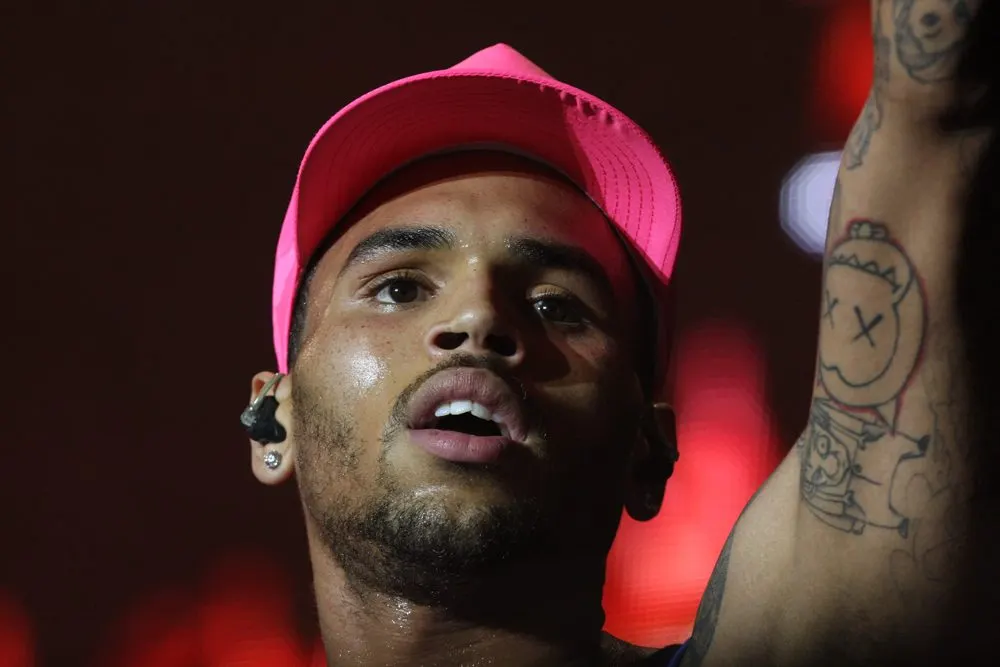 Chris Brown performing on stage in 2012
Credit: Eva Rinaldi, Wikimedia Commons, CC BY-SA 2.0
A long road to sentencing
The case has taken more than three years to reach its conclusion, and it nearly derailed Brown's career in the meantime. Brown, a two-time Grammy winner, was arrested in May 2025 after returning to Britain for the first time since the incident, and he was initially denied bail, throwing his worldwide Breezy Bowl XX tour into doubt. He was eventually released after promising to pay a £5 million security fee, allowing the tour to go ahead, as reported by USA Today.
The singer was freed on bail again on Friday, ahead of Monday's sentencing hearing. The long gap between the incident and the sentence reflects the complexity of the case, which involved multiple defendants, video evidence and a change of plea. For Diaw, the sentence brings a formal end to a case that began on a night out in one of London's most exclusive neighbourhoods and ended in one of its busiest criminal courts.
Brown's legal troubles have followed him for much of his career. He was charged with assaulting his then partner Rihanna in 2009, a case that made headlines around the world and shaped public discussion of his career ever since. The Mayfair case is the latest in a series of court appearances, though Monday's outcome means he leaves court without a prison term, provided he stays out of trouble for the next year.
Reaction and what the sentence means
The Metropolitan Police welcomed the outcome. Detective Chief Superintendent Christina Jessah said in a statement carried by the Metropolitan Police: "Violence will not be accepted on the streets of London. Regardless of an individual's profile or status, we will pursue those responsible and work tirelessly to bring them before the courts." The message was echoed by the judge, who made clear that celebrity was no shield.
A suspended sentence is often misunderstood. It means the court has imposed a prison term but chosen not to enforce it immediately. For Brown, the eight months will only become real custody if he commits another offence during the 12 month suspension period, or breaches any conditions set by the court. For Akinlolu, the same applies to his four month term. Both men leave court free, but with a serious conviction on their records and a clear warning about what follows any repeat.
The case also raises a wider question about violence in nightlife venues and the responsibility of clubs and their guests. Tape is a private members' club in one of London's wealthiest districts, and the attack took place on its dance floor in front of other clubgoers. The footage shown in court left little room for dispute about what happened, and the guilty pleas meant the case was decided on sentence rather than on contested facts.
What comes next for Brown
For Brown, the sentence closes a case that has hung over him for more than three years, but it does not end the scrutiny. His Breezy Bowl XX world tour, which was thrown into doubt by his arrest in May 2025, went ahead after he secured release on a £5 million security fee, and he remains one of the best known R and B performers in the world. The suspended term means his freedom for the next year depends on staying out of trouble, a condition the judge made plain in court. Any further offence in the suspension period could see the eight months activated, a consequence that would halt touring and recording alike. For now, he leaves court free, with fans cheering outside and a warning ringing in his ears.
For readers following the case, Verity's entertainment section carries the latest music and celebrity news, while Verity's news section follows court cases and crime stories. Information on how courts work is published by the UK judiciary. Verity's homepage has the day's top stories, and the about page explains more about the site. Readers can also explore Verity's world coverage and Verity's politics section, and find Verity's business coverage for the commercial side of the music industry.


