A meeting at Carrington
Manchester United head coach Michael Carrick and club captain Bruno Fernandes have met face to face to clear the air, with both men vowing to refocus on turning the club's season around. The meeting took place at United's Carrington training ground on Tuesday, according to Sky Sports News reporting, and it was described as an open and frank discussion. Carrick is reported to be satisfied that the animosity between the pair is over, although it is not known whether Fernandes apologised for his public criticism of the head coach.
The talks matter because they come at a moment of acute pressure for both men and for the club. United sit 16th in the Premier League, with only one league win so far this season, and Carrick was widely expected to lose his job after Sunday's defeat. Instead, the board has given him the chance to take the team to Chelsea on Saturday, and the meeting with his captain is part of the attempt to steady a dressing room that has looked unsettled for weeks. For readers following sports news, the story is a familiar one in football: a public disagreement, a dropped captain, and a private conversation intended to draw a line under it before the next match.
Fernandes is now expected to be in contention for the match at Stamford Bridge on Saturday, according to further reporting on the meeting. That is a significant shift from Sunday, when he remained on the bench for the entire 90 minutes as United lost 3-0 at home to Bournemouth. Whether he starts against Chelsea will be Carrick's decision, and it will be read closely as a signal of how far the reconciliation has gone. For now, the reporting is clear on one point: the captain is available again, and the head coach has not ruled him out.
How the rift opened
The tension between Carrick and Fernandes became public after United's 4-1 Champions League defeat at Como. Fernandes, speaking after that match, questioned Carrick's tactics and, in particular, the decision not to press opponents man to man. He argued that the approach allowed Como to exploit space and gain confidence, and he stressed the need for United to show greater bravery when playing under pressure. Those comments were widely reported and widely discussed, because a club captain criticising his head coach's tactics in public is rare, and it rarely passes without consequence.
The consequence came on Sunday. Carrick left Fernandes out of the starting line-up against Bournemouth and did not introduce him as a substitute, even as United fell behind and then lost 3-0 at Old Trafford. Carrick described his reasons for dropping his captain as pure football, and he defended the decision in familiar terms. As he told Sky Sports: "Picking the team is always a difficult decision. We've got to make what we feel is the right one for the team to try to get the performance we want." That explanation framed the omission as a selection call, not a punishment, but few observers read it that way. The timing, coming days after Fernandes's criticism, made the link hard to avoid.
The Bournemouth defeat itself deepened the crisis. Losing 3-0 at home to a side United would normally expect to beat, while the captain sat unused on the bench, left Carrick's position looking fragile. Many observers expected the axe to fall on the head coach in the wake of the result, and reports on Monday suggested his future was under serious discussion at board level. Instead, United resolved to give the 45-year-old more time, and Carrick took training on Tuesday, the same day he met Fernandes. That sequence, a reprieve followed by a clear-the-air meeting, suggests the club wants to see whether the squad can respond before making a larger change.
A squad meeting, and a shared admission
The individual meeting between Carrick and Fernandes was in addition to a wider meeting of the full squad, according to Sky Sports News. That session, held as part of the same effort to reset the season, produced a renewed determination from players and staff that performances have to improve immediately. There was also, according to reporting, a mutual admission that the squad as a whole has underperformed so far this season. That framing matters, because it spreads responsibility beyond the head coach and the captain and acknowledges a problem that has been visible in results for weeks.
United's league position tells its own story. Sixteenth place, with a single league win, is far below what the club expects, and it leaves little room for further setbacks. The squad is understood to be capable of challenging for Champions League qualification, according to reporting on the board's view, which makes the current run harder to explain and harder to defend. Senior figures at Old Trafford are reported to believe Carrick should not bear the entire responsibility for the team's struggles, and that the players have failed to perform to their expected standard. That view helps explain why Carrick has been given another match, but it also puts pressure on the players to prove the board right at Chelsea.
The wider context has not helped. Fernandes was the second United player in two weeks to make outspoken comments after a match, following Lisandro Martinez's criticism of the club hierarchy after the 2-0 Champions League loss to Atletico Madrid on 13 October. Martinez took aim at director of football Jason Wilcox and questioned the club's lack of spending in the summer transfer window. Taken together, the two episodes paint a picture of a dressing room where frustration has spilled into public view, and where the leadership, on and off the pitch, has struggled to keep disagreements behind closed doors.
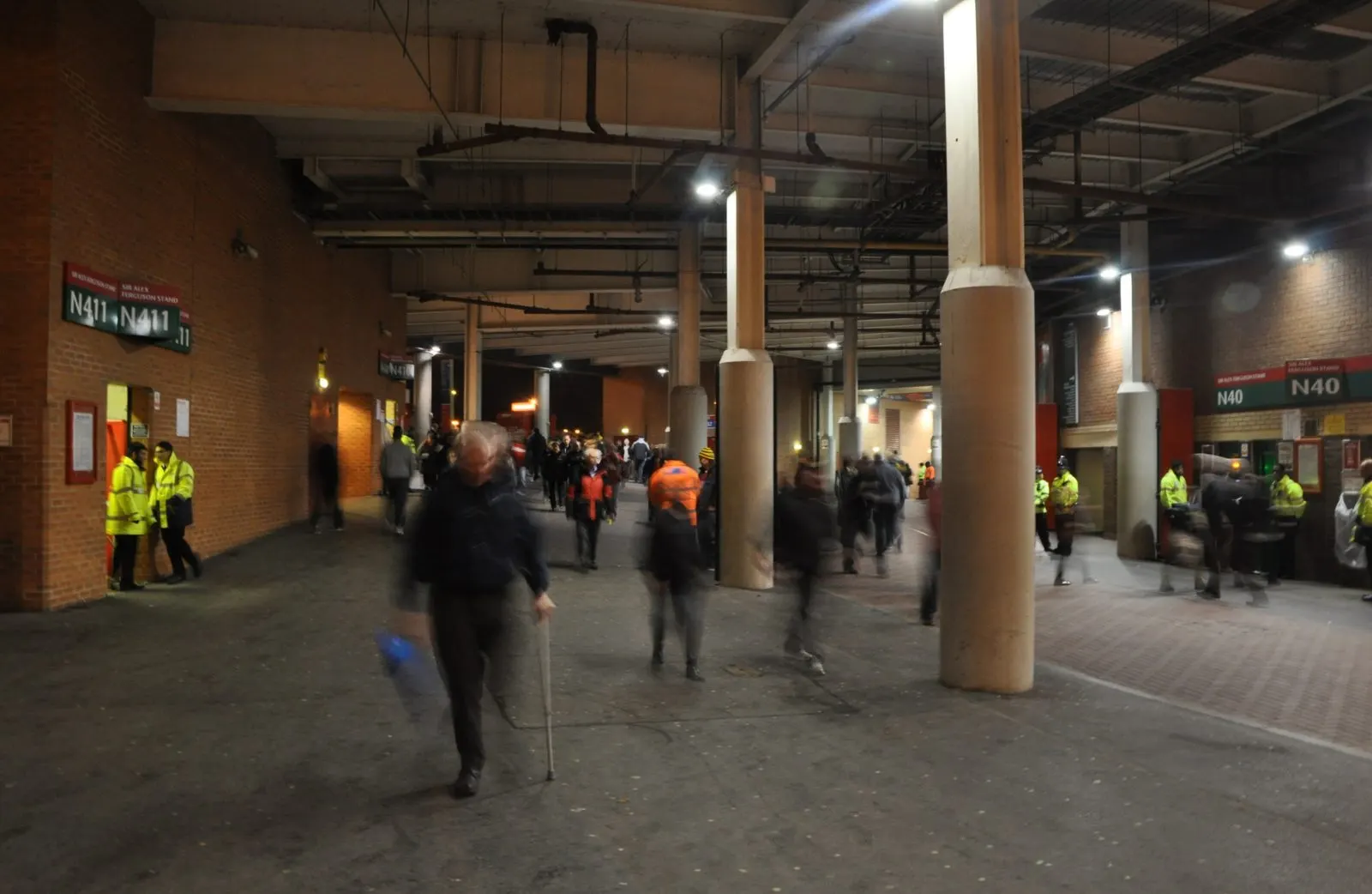
 Old Trafford stadium viewed from outside on a matchday
Credit: Arne Mueseler, via Wikimedia Commons, CC BY-SA 3.0 de.
What Carrick needs from Chelsea
Saturday's match at Chelsea is now a test of whether the talks have changed anything on the pitch. Chelsea at Stamford Bridge is a difficult fixture at the best of times, and United arrive there short of form, short of confidence and under intense scrutiny. A positive result would buy Carrick time and give the reconciliation story some substance. Another heavy defeat would revive the questions about his future immediately, regardless of what was said at Carrington.
Fernandes's role will be central to that test. The Portugal international, aged 32, has been one of United's most important players for years, and he was named the PFA Players' Player of the Year last season, according to Press Association reporting. Reports this week described him as looking back to his best over the past 48 hours after a difficult period on and off the pitch, a description that, if accurate, would be welcome news for Carrick. A captain playing with confidence and authority changes the mood of a team, and United need that change urgently.
There is also a small piece of good news for Carrick. Midfielder Kobbie Mainoo returned to training on Wednesday after a fortnight on the sidelines with injury, according to reporting on the squad's preparations. Mainoo's return gives Carrick another option in midfield and another player who can help United control matches, something they have struggled to do during the poor run. It does not solve the larger problems, but it widens the choices available for a match where United will need to be organised and resilient.
The uncertainty around Carrick's longer term future has not gone away. Reports say United have drawn up a shortlist of potential replacements, even as they give him the Chelsea match, according to further reporting on the talks. That is normal practice for a club in this position, but it also means Carrick is working with the knowledge that his time may be limited. The clear-the-air talks with Fernandes should be seen in that light: not as a final settlement, but as an attempt to get through the next match with a united squad and a fighting chance of a result.
Why this story resonates beyond United
Stories like this one attract attention because they reveal how football clubs handle conflict in public. A head coach and a captain disagreeing about tactics is not unusual in itself. What makes it news is the sequence: criticism in public, a dropping that looks like a response, a heavy home defeat, and then a private meeting reported as a reconciliation. Each step was visible, and each step invited interpretation from fans, pundits and former players. The talks at Carrington are an attempt to close that sequence and return the focus to football.
For United supporters, the hope will be that the meeting marks a genuine reset rather than a temporary truce. The club has been through several cycles of crisis and attempted recovery in recent years, and supporters have heard promises of renewed determination before. What they have not seen, so far this season, is a sustained improvement in results. Chelsea offers a chance to change that narrative, but only if the team that takes the field looks organised, committed and united in a way it has not for much of the campaign.
For neutral observers, the episode is a reminder of how quickly authority can be tested in modern football. A captain's words carry weight, a head coach's team selection is a public statement, and a board's decision to stand by a manager is only as strong as the next result. Carrick and Fernandes have now said what needed to be said in private, according to those reporting the talks. The harder part, turning that conversation into points on the pitch, begins on Saturday. Readers can follow more sports coverage on the Verity homepage and read the site's about page for more on its coverage, or use the contact page to reach the newsroom.