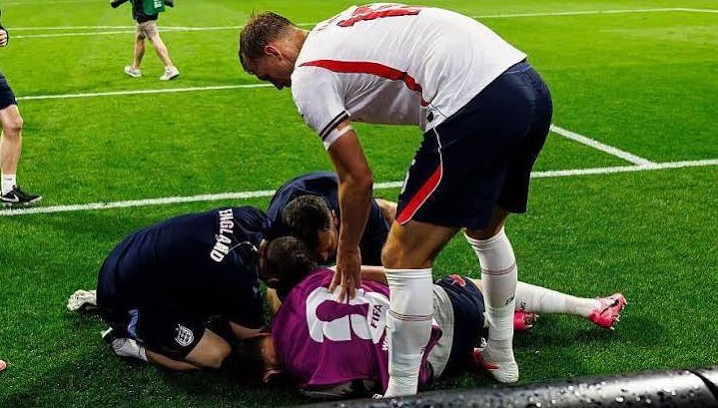
The FIFA World Cup has always been a stage where unforgettable moments are created, and sometimes, controversial refereeing decisions become just as memorable as the matches themselves. Germany's dramatic Round of 32 clash against Paraguay was one such occasion. What looked like a match-winning goal for Germany in extra time was overturned after intervention from the Video Assistant Referee (VAR), sparking widespread debate among fans, players, pundits, and football experts.
The decision ultimately changed the course of the game. Instead of taking a crucial lead, Germany remained level before eventually losing 4-3 in a penalty shootout. Following the match, Germany head coach Julian Nagelsmann openly criticized the decision, while FIFA defended its officials by explaining that referees had been instructed to penalize exactly this type of incident before the tournament even began.
The controversy has once again raised important questions about VAR, modern football officiating, and how the Laws of the Game continue to evolve.
Germany appeared to have secured a 2-1 advantage during extra time when defender Jonathan Tah found the back of the net following a corner kick. The celebrations, however, were short-lived.
The VAR reviewed the play and advised Moroccan referee Jalal Jayed to examine the incident on the pitch-side monitor. After reviewing the footage, the referee ruled that Germany defender Waldemar Anton had illegally obstructed Paraguay goalkeeper Orlando Gill before the goal was scored.
As a result, the goal was disallowed.
The score remained 1-1, forcing the match into a penalty shootout where Paraguay emerged victorious after winning 4-3. Ironically, Jonathan Tah, who had earlier believed he had scored the winning goal, missed his penalty, allowing Paraguay to seal one of the biggest upsets of the tournament.
The controversy intensified after Germany's elimination, but FIFA quickly clarified why the goal had been ruled out.
According to FIFA's Head of Refereeing, Pierluigi Collina, referees received detailed guidance before the World Cup regarding obstruction inside the penalty area.
The emphasis was particularly focused on situations where attacking players deliberately block defenders or goalkeepers without attempting to play the ball themselves.
Collina explained that if an attacker positions themselves solely to prevent an opponent—especially the goalkeeper—from moving freely or attempting to save the ball, referees should consider it a foul.
Importantly, FIFA stated that coaches and players were informed about this interpretation before the tournament started, meaning officials were simply applying the guidelines consistently.
This explanation aimed to demonstrate that the decision was not an unexpected interpretation introduced during the competition but rather part of FIFA's broader effort to improve fairness in set-piece situations.
Blocking has become one of football's most discussed tactical strategies over the past decade.
During corners and free kicks, attacking players frequently position themselves between defenders and the goalkeeper to create space for teammates.
While some of these movements are perfectly legal, problems arise when a player makes no genuine attempt to challenge for the ball and instead focuses entirely on preventing an opponent from moving.
Goalkeepers are particularly vulnerable because even slight contact can affect their positioning, balance, or ability to react quickly.
Modern refereeing guidelines increasingly prioritize protecting goalkeepers in these scenarios, especially during crowded set pieces.
FIFA believes that allowing deliberate obstruction would give attacking teams an unfair advantage while making it more difficult for officials to manage physical confrontations inside the penalty area.
Germany manager Julian Nagelsmann did not hide his disappointment after the match.
He argued that the contact between Anton and goalkeeper Orlando Gill was minimal and should never have resulted in a foul.
From his perspective, football remains a contact sport where players naturally compete for space during corners.
Nagelsmann suggested that the goalkeeper initiated much of the contact himself and questioned whether the incident truly justified overturning a goal through VAR intervention.
His comments reflected the frustration felt by many German supporters, who believed their team had been denied a legitimate winning goal during one of the tournament's most important matches.
The incident immediately divided football analysts.
Some refereeing experts agreed with FIFA's interpretation, arguing that Anton was not attempting to play the ball and instead positioned himself solely to restrict the goalkeeper's movement.
Others believed the contact was too minor to justify overturning an on-field decision.
One of the biggest questions centered around VAR's role itself.
The technology was introduced to correct "clear and obvious errors," not to re-referee every physical challenge during a match.
Critics argued that this incident involved subjective interpretation rather than an unmistakable mistake by the referee.
Supporters of the decision, however, pointed out that FIFA had already identified blocking as an area of focus before the tournament, making VAR intervention entirely consistent with those pre-established guidelines.
Over recent years, football's governing bodies have placed increasing emphasis on protecting goalkeepers during set pieces.
Corners often involve ten or more players competing within a very small area, making obstruction difficult to detect in real time.
Without stricter enforcement, attackers can intentionally block defenders or goalkeepers, creating scoring opportunities that have little to do with skill and more to do with physical interference.
By instructing referees to penalize these situations more consistently, FIFA hopes to encourage fairer competition while reducing unnecessary physical confrontations inside the penalty area.
Although these interpretations sometimes produce controversial decisions, officials believe consistency ultimately benefits the game.
While FIFA defended the decision, the incident reignited a broader discussion about how VAR should be used in football. Since its introduction, VAR has helped eliminate many obvious refereeing mistakes, including incorrect offside decisions, mistaken identities, and clear fouls missed by match officials.
However, subjective decisions remain controversial.
Supporters of Germany argued that football is a physical sport and that minor contact inside the penalty area happens during nearly every corner kick. If every similar incident were reviewed, they claimed, many goals would eventually be ruled out.
Others defended the officials by pointing out that consistency is one of the biggest challenges in football officiating. If FIFA has instructed referees to punish deliberate blocking—especially when goalkeepers are involved—then officials must apply the law equally regardless of the teams playing.
The debate highlights one of football's biggest modern challenges: balancing the spirit of the game with increasingly detailed interpretations of its laws.
As FIFA's Chairman of the Referees Committee, Pierluigi Collina has consistently emphasized improving fairness and consistency across international competitions.
Ahead of the World Cup, Collina reportedly highlighted blocking and obstruction as one of the key areas referees should monitor during set pieces. His guidance focused on situations where attackers intentionally interfere with opponents without making any genuine attempt to play the ball.
According to FIFA, this approach is designed to reduce unfair advantages during corners and free kicks while protecting goalkeepers from being deliberately prevented from making saves.
For referees, these situations are rarely straightforward. They must quickly determine whether a player is legitimately competing for position or intentionally obstructing an opponent.
VAR provides an additional opportunity to review those incidents, but it also increases scrutiny whenever subjective decisions influence the outcome of important matches.
The disallowed goal proved to be the defining moment of Germany's tournament.
Had Jonathan Tah's goal stood, Germany would likely have advanced to the Round of 16. Instead, the match remained level before heading into a tense penalty shootout.
Paraguay kept their composure from the penalty spot, while Germany suffered heartbreak when Tah's penalty sailed over the crossbar. José Canale then converted the decisive kick, securing a memorable victory for Paraguay and sending the four-time world champions home.
For Germany, the defeat marked another disappointing chapter in recent international tournaments. Expectations were high under head coach Julian Nagelsmann, but another early exit has intensified discussions about the team's future and its ability to compete consistently at the highest level.
While much of the post-match conversation centered on VAR, Paraguay's performance deserved recognition.
The South American side remained organized throughout the match, defended resiliently under pressure, and showed remarkable composure during the penalty shootout. Their goalkeeper, Orlando Gill, made several important contributions, while the team's discipline frustrated one of football's traditional powerhouses.
Advancing to the Round of 16 represents a significant achievement for Paraguay and demonstrates that determination, tactical organization, and confidence can overcome even the tournament favorites.
Rather than allowing the controversy to overshadow their accomplishment, Paraguay will now focus on preparing for an even greater challenge in the knockout stages.
Germany's controversial elimination may influence how teams approach attacking set pieces throughout the remainder of the tournament.
Coaches are likely to instruct players to avoid unnecessary contact with goalkeepers and defenders during corners. Instead of using physical blocks to create space, teams may focus on movement, positioning, and creative routines that comply with FIFA's latest refereeing guidance.
Referees, meanwhile, will continue facing enormous pressure to apply these interpretations consistently. Every VAR intervention in high-profile matches will inevitably be analyzed from multiple angles, making transparency and communication increasingly important.
If FIFA maintains its current approach, players and coaches will need to adapt quickly to avoid costly decisions that could determine the outcome of knockout matches.
Football has continuously evolved throughout its history.
From the introduction of goal-line technology to VAR, the sport has embraced innovations aimed at improving fairness and accuracy. Yet every change brings new debates about where the balance should lie between technology and the human element of officiating.
The Germany-Paraguay incident illustrates that even with advanced technology, football will always involve subjective judgments. Different referees may interpret the same challenge differently, and fans will continue to disagree about controversial calls.
Rather than eliminating debate, VAR has shifted discussions from whether an incident was seen to whether it was interpreted correctly.
For FIFA, the priority remains consistency. For supporters, however, consistency must also be accompanied by decisions that preserve the natural flow and competitive spirit of the game.
The controversy surrounding Germany's disallowed goal against Paraguay will likely remain one of the defining moments of this FIFA World Cup. While Germany believed they had scored a crucial extra-time winner, VAR intervention and FIFA's interpretation of blocking fouls ultimately changed the course of the match.
FIFA's explanation makes it clear that referees were instructed before the tournament to penalize attackers who deliberately obstruct opponents, particularly goalkeepers, without attempting to play the ball. From the governing body's perspective, the officials simply enforced the guidance that had already been communicated to teams.
Nevertheless, the decision has sparked widespread discussion about VAR, referee interpretation, and the balance between enforcing the laws of the game and preserving football's natural rhythm.
As the tournament continues, this incident will likely influence how teams attack set pieces and how referees evaluate similar situations. Whether fans agree with the decision or not, one thing is certain: football's laws continue to evolve, and every major tournament brings new lessons about the game's pursuit of fairness, consistency, and integrity.
%20(1).jpg)