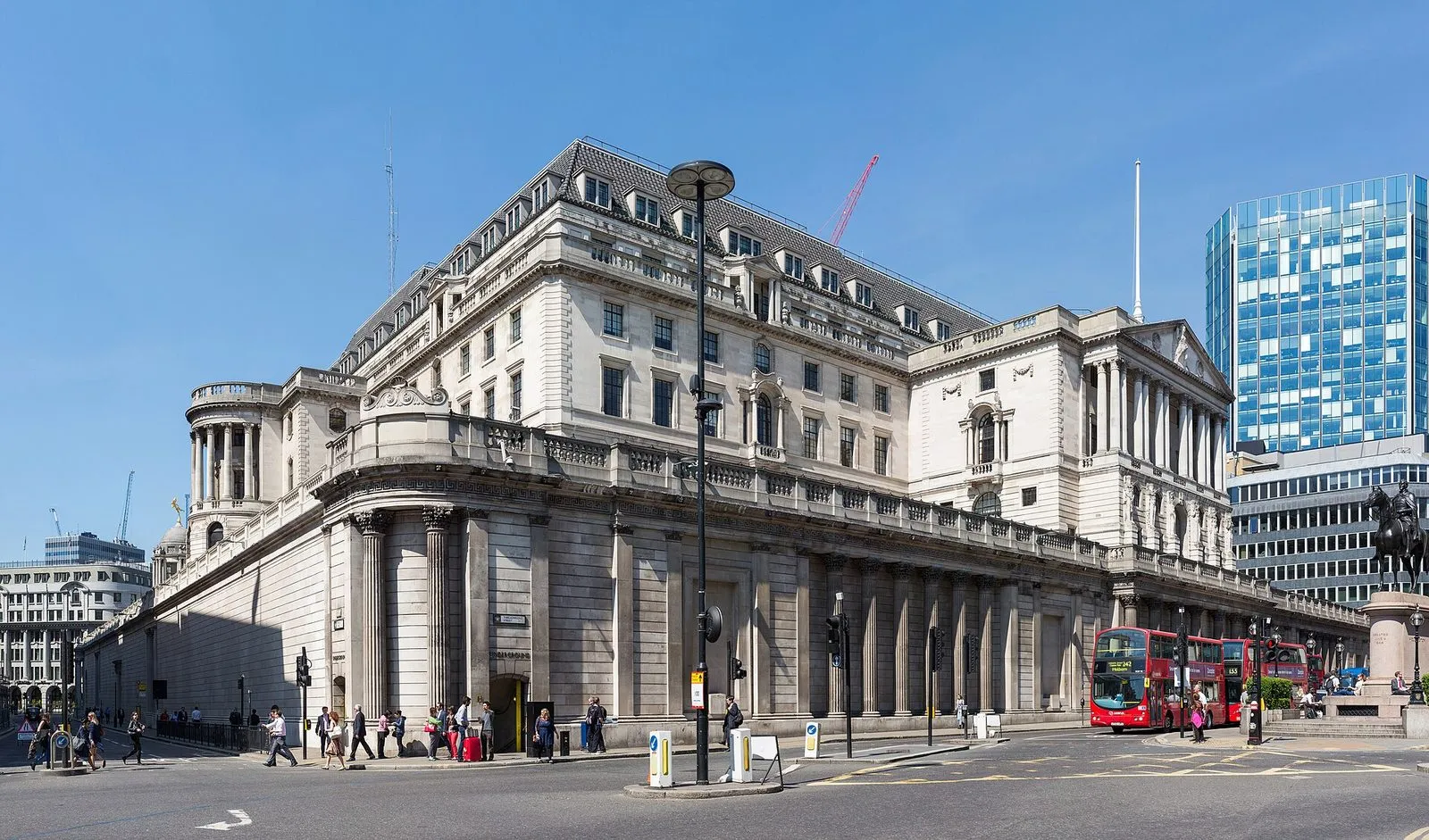
Chancellor John Healey has been handed the worst possible economic backdrop for his first Budget. New figures from the Office for National Statistics show UK inflation climbing to 3.5% in September — the highest in nearly a year — while government borrowing surged to £24.5 billion in the same month. The twin blow lands exactly one week before Healey stands up in the Commons on 28 October, and it dramatically narrows whatever room he had for tax cuts or spending giveaways.
Consumer price inflation rose from 3.1% in August to 3.5% in the year to September, above the 3.4% analysts had expected and the quickest pace of price growth since October 2025. The September reading carries particular weight: it is the figure typically used to calculate the following April's increase in benefits, so the higher number will feed directly into the welfare bill the Chancellor must fund, the BBC reported.
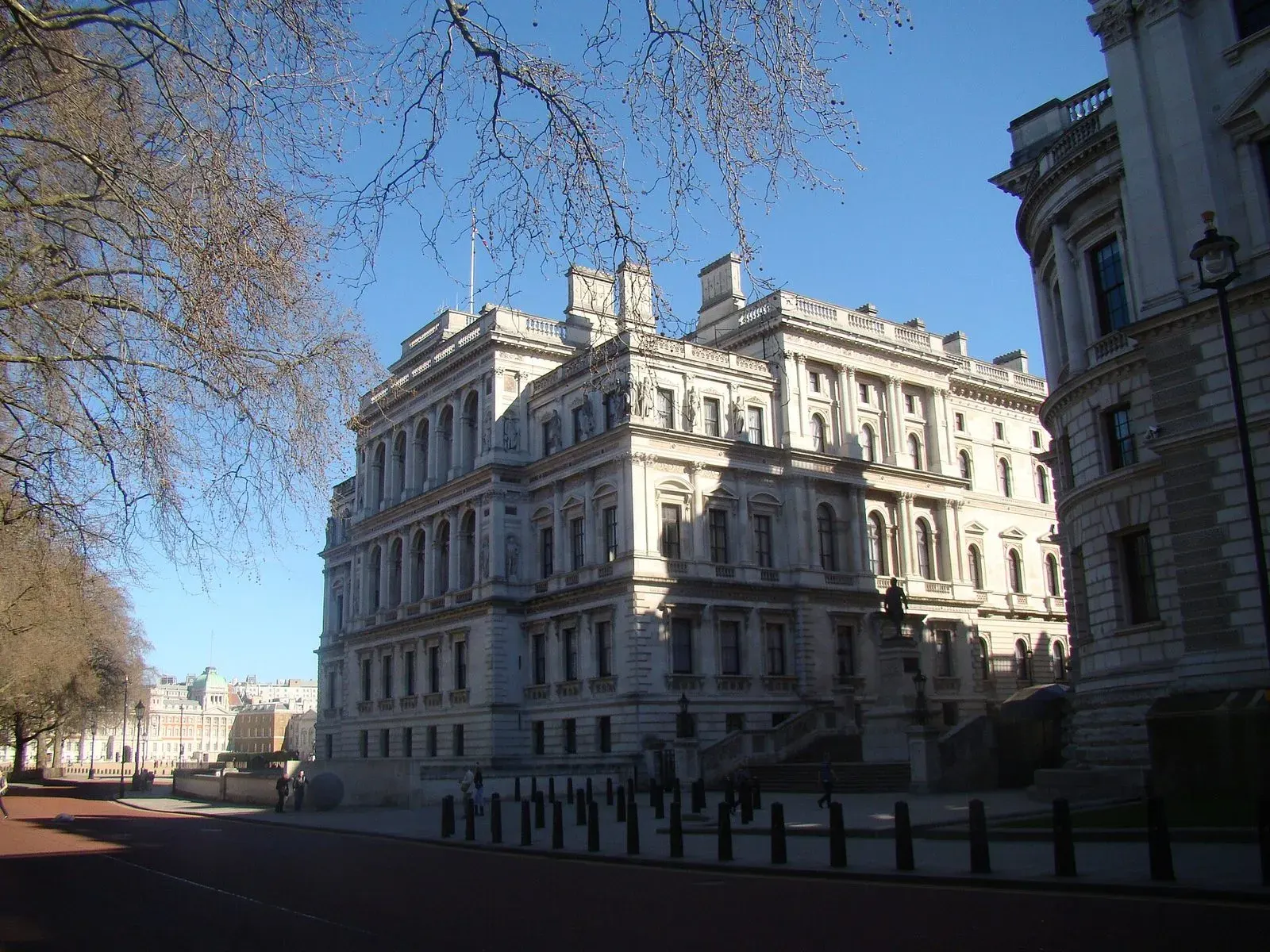 The HM Treasury building in Westminster
The Treasury in Westminster — the Chancellor's room for manoeuvre is shrinking fast ahead of the 28 October Budget. (Robert Lamb, CC BY-SA 2.0, via Wikimedia Commons)
Fuel prices drive the inflation surge
Motor fuel was the single biggest driver of the inflation jump. Petrol climbed 8.2p in a single month to an average of 169.5p a litre — the highest since August 2022 — while diesel reached 192.5p a litre, with motor fuel prices overall up 29.8% on the year, according to The Times. The ONS also pointed to higher prices for air travel, computer games, and live events, with chief economist Grant Fitzner noting that transport costs accounted for the largest upward contribution to the monthly change.
The fuel surge is not a purely domestic story. Pump prices are being pushed higher by pressures well beyond Britain's shores: conflicts in the Middle East and Europe squeezing global oil supplies, disruption to crude shipments through the Strait of Hormuz, and damage to refining capacity linked to the Russia–Ukraine war. Producer input prices — what manufacturers pay for raw materials — rose 8.3% on the year, with crude oil up 14% in a single month, suggesting the cost pressure has further to run.
Restaurants and hotels provided the largest downward offset to the headline rate, but it was not enough to hold back the overall climb. With inflation now running well above the Bank of England's 2% target, expectations are hardening that policymakers could raise interest rates at their next meeting on 5 November — adding to mortgage and borrowing costs for households and businesses alike.
Borrowing overshoots — again
The public finances data was no better. The government borrowed £24.5 billion in September, up from £17.3 billion in August and above the £23.9 billion analysts had forecast. It was £1.8 billion more than the same month last year, Alliance News reported.
For the first six months of the financial year, borrowing totals £97.8 billion. That is £4.4 billion lower than the same period last year — some comfort for the Treasury — but it is £6 billion above the forecast set by the Office for Budget Responsibility at the spring statement in March. Borrowing has now overshot the official forecast in each of the last several monthly releases, a pattern that has alarmed economists and investors.
The UK labour market has also been weakening, with job vacancies falling to a five-year low — adding to the sense that the economy is slowing just as the fiscal picture darkens.
The £10.9 billion interest bill
Perhaps the most striking figure of all is what the government is paying to service its debts. September's interest bill reached £10.9 billion — the highest amount for that specific month since records began in 1997, and only the eighth month ever above £10 billion, according to BM Magazine. The cost partly reflects inflation-linked government bonds, which automatically pay out more when prices rise — a vicious circle in which inflation directly inflates the Treasury's own bill.
Economists now expect the OBR to project that debt interest spending will exceed £100 billion every year until at least the 2030s when it publishes new forecasts alongside the Budget — a sum larger than the entire education budget. It is a stark illustration of how the cost of past borrowing is consuming an ever-larger share of public money before a single pound is spent on schools, hospitals, or defence.
Debt passes £3 trillion for the first time
Total public sector debt provisionally passed £3 trillion for the first time in September — a milestone that underlines the scale of the fiscal challenge, even though debt as a share of the economy eased to 94%, down from 95% a year earlier. In cash terms, Britain has never owed more; relative to the size of the economy, the burden is marginally lighter than twelve months ago.
The Evening Standard described the data as a "pre-Budget blow" to the Chancellor, and the assessment from economists was bleak. Resolution Foundation interim chief economist Greg Thwaites said the numbers illustrated the Chancellor's "double dilemma": how to ease cost-of-living pressures for families while keeping a lid on government borrowing, with borrowing already off track and markets scrutinising the public finances closely, as reported.
Matt Swannell of the EY Item Club warned the Budget was likely to be a "relatively low-key affair", with higher gilt yields having left Healey between £10 billion and £15 billion of margin against his fiscal rule. With little room for manoeuvre, he said, any giveaways were likely to be modest and temporary.
What this means for the Budget
The figures sharpen the decisions facing the Chancellor on 28 October. He has refused to rule out tax increases and is expected to raise taxes on banks, but remains bound by pre-election pledges not to increase income tax, National Insurance, or VAT — a commitment already confirmed in recent days.
Higher inflation is doubly painful for the Treasury. It erodes the real value of government borrowing, but it also raises the cost of living that ministers are under pressure to ease, and it mechanically pushes up the interest payments on inflation-linked gilts. September's figures mean benefits will rise faster next April, further adding to spending commitments.
For households, the squeeze is familiar: fuel prices at four-year highs, food costs elevated, and now the prospect of higher borrowing costs if the Bank of England acts in November. For British businesses and betting firms already shedding jobs over tax rises, the message from Wednesday's data is that no cavalry is coming — the Chancellor simply cannot afford one.