The Rise of BRICS: Can It Challenge Western Global Influence?
For decades, the United States and its Western allies have played a dominant role in shaping the global economy, international institutions, and geopolitical decision-making. Organizations such as the G7, NATO, the International Monetary Fund (IMF), and the World Bank have largely reflected Western priorities and leadership.
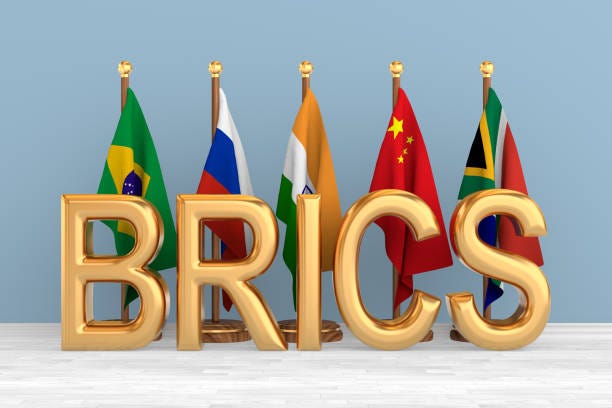
However, the global balance of power is gradually changing. A growing coalition of emerging economies known as BRICS is expanding its economic influence, attracting new members, and promoting alternatives to Western-led financial and political systems.
As the bloc continues to grow, an important question is emerging:
Can BRICS truly challenge Western global influence, or will it remain an economic partnership with limited geopolitical power?
The answer could shape the future of international relations for decades.
What Is BRICS?
BRICS is an international group of major emerging economies originally formed by:
The acronym was initially created by economist Jim O'Neill in 2001 to describe rapidly growing economies expected to reshape global markets.
What began as an economic concept eventually evolved into a political and diplomatic alliance focused on increasing the influence of developing nations.
Today, BRICS has expanded to include several additional countries, reflecting its growing ambition to represent a larger share of the Global South.
Why Is BRICS Becoming More Influential?
Several global developments have accelerated BRICS' rise.
Collectively, BRICS countries represent a significant share of the world's:
- GDP (Purchasing Power Parity)
China and India alone account for more than one-third of humanity.
Their expanding middle classes continue to drive global economic growth.
Many developing countries believe organizations created after World War II no longer reflect today's global economy.
Institutions like the IMF and World Bank are often criticized for:
- Strict lending conditions
- Limited representation of developing nations
BRICS argues that emerging economies deserve a stronger voice in global governance.
One of BRICS' biggest milestones has been its expansion.
More countries have expressed interest in joining because they see benefits, including:
- Greater trade opportunities
- Reduced dependence on Western financial systems
The expansion demonstrates that many nations are looking for alternatives in an increasingly multipolar world.
BRICS vs G7: Understanding the Difference
Although both groups consist of influential economies, their goals differ significantly.
BRICSG7Emerging economiesAdvanced economiesFocus on development Focus on established global leadership Promotes multipolar governance Supports existing international institutionsExpanding membershipLimited membershipRepresents much of the Global South Represents major Western democracies
Rather than replacing the G7, BRICS aims to create greater balance in international decision-making.
Can BRICS Reduce Dependence on the US Dollar?
One of BRICS' most discussed initiatives involves reducing reliance on the US dollar in international trade.
Many member countries have explored:
- Trading in local currencies
- Expanding bilateral currency agreements
- Strengthening regional payment systems
- Increasing financial cooperation
The goal is not necessarily to eliminate the dollar but to reduce vulnerability to exchange rate fluctuations and geopolitical sanctions.
However, replacing the dollar remains an enormous challenge because it continues to dominate global finance, international trade, and central bank reserves.
The Strategic Importance of China and India
China and India play central roles within BRICS.
China
China is the world's second-largest economy and a global manufacturing powerhouse.
Its investments through initiatives such as the Belt and Road Initiative have expanded Beijing's influence across Asia, Africa, and Latin America.
India
India is one of the world's fastest-growing major economies.
Its expanding technology sector, large workforce, and strategic location make it an increasingly important global player.
Despite occasional disagreements, both countries recognize the value of cooperation within BRICS.
Challenges Facing BRICS
Despite its growing influence, BRICS faces several internal challenges.
Member countries have different political systems, strategic priorities, and foreign policy goals.
This can make consensus difficult.
China and India have unresolved border disputes.
Russia faces ongoing geopolitical tensions with Western nations.
These issues sometimes complicate cooperation.
The economic strengths and weaknesses of member countries vary significantly.
Some depend heavily on commodities.
Others rely on manufacturing or services.
Balancing these different interests requires careful negotiation.
Unlike the European Union, BRICS does not have:
Most cooperation remains voluntary.
Why the Global South Is Paying Attention
Many developing nations see BRICS as an opportunity to diversify international partnerships.
Countries across Africa, Latin America, Asia, and the Middle East increasingly seek:
- Infrastructure investment
For these countries, BRICS represents additional choices rather than replacing existing alliances.
How BRICS Could Reshape Global Trade
As membership expands, BRICS could influence:
- Infrastructure investment
Its combined economic weight gives the bloc increasing leverage in global negotiations.
Is the World Becoming Multipolar?
Many analysts argue the international system is gradually shifting away from a single dominant power toward a more multipolar structure.
Instead of one or two countries shaping global affairs, multiple regional powers are becoming increasingly influential.
These include:
BRICS reflects this broader transformation.
What Does This Mean for the Future?
The rise of BRICS does not necessarily mean the decline of Western influence.
Instead, it signals the emergence of a more competitive and interconnected international order.
Future global leadership may depend less on military strength alone and more on:
Countries capable of building partnerships across different regions will likely play the most influential roles.
Final Thoughts
The rise of BRICS represents one of the most significant geopolitical developments of the 21st century. As emerging economies gain economic strength and greater international influence, the global balance of power is gradually becoming more diversified.
Whether BRICS can fundamentally challenge Western influence remains uncertain. Internal differences, geopolitical tensions, and institutional limitations continue to present obstacles. Nevertheless, the bloc's expansion and growing economic weight demonstrate that the international system is evolving toward a more multipolar future.
Rather than replacing the West, BRICS is likely to become an increasingly important pillar of global governance—offering developing nations a stronger voice while encouraging greater competition, cooperation, and balance in world affairs.