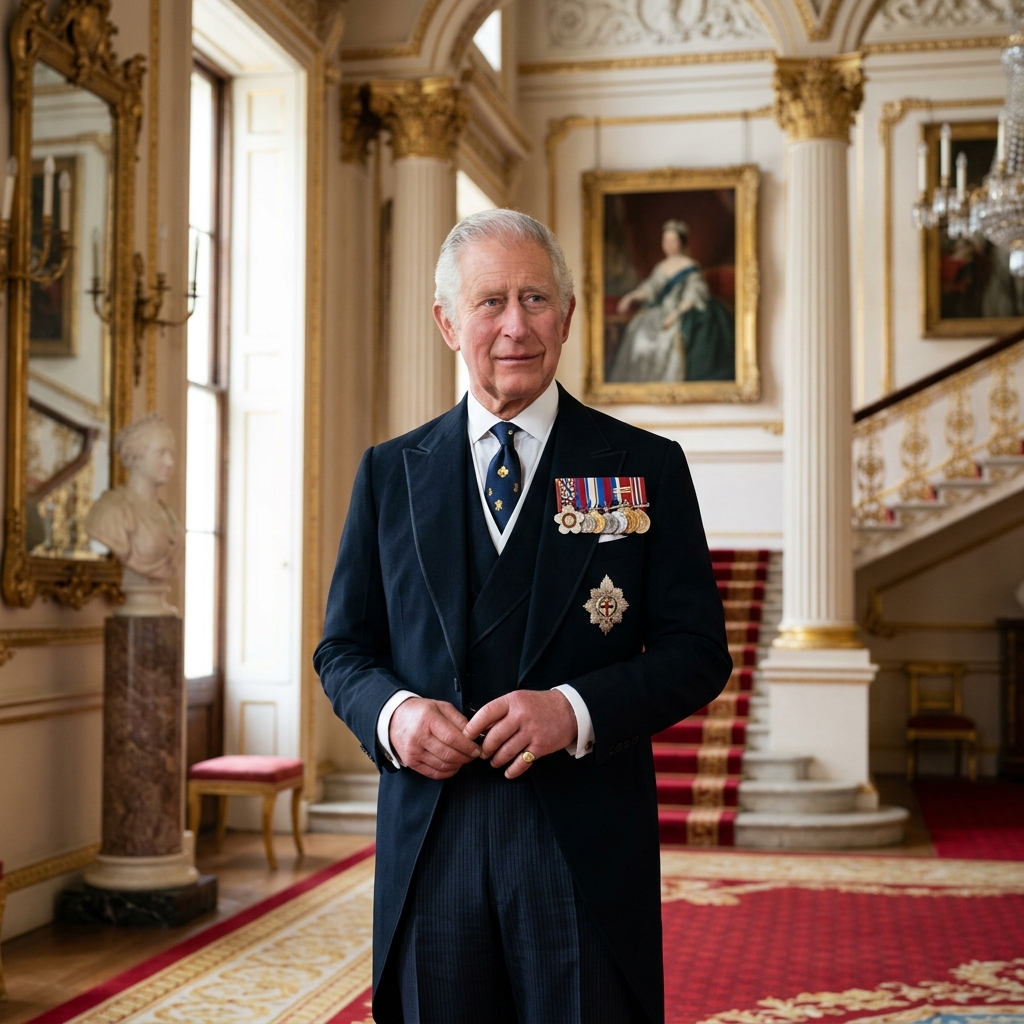
London: In a move widely seen as one of the most significant transparency measures introduced by the British monarchy in recent decades, King Charles III has publicly disclosed the amount of tax he paid during the last financial year. The unprecedented announcement comes as government funding for the Royal Household is also set to rise substantially over the next few years, reigniting debate over the cost, accountability and future role of the monarchy.
The annual financial report published by the Royal Household confirms that King Charles voluntarily paid £12.9 million in taxes during the 2024–25 financial year. The Prince of Wales, Prince William, also revealed his own tax contribution, reporting payments of £7.76 million over the same period.
The disclosures mark the first time in modern British history that a reigning monarch has voluntarily published details of their personal tax payments. While British monarchs are not legally required to pay income tax, the royal family has traditionally done so on a voluntary basis. Until now, however, the precise figures had never been made public.
The decision has been welcomed by some as a step toward greater openness, while others argue that the disclosures still leave important questions unanswered regarding royal wealth and public funding.
A Historic Shift Toward Financial Transparency
For decades, the finances of Britain’s Royal Family have attracted public attention, but many aspects remained private. Although annual reports outline official spending, the King’s personal tax obligations had never before been disclosed in detail.
Buckingham Palace described the decision as an effort to strengthen public confidence by increasing transparency around royal finances.
Officials said both King Charles and Prince William independently chose to make their tax payments public to demonstrate accountability at a time when scrutiny of public institutions continues to grow.
The announcement represents a noticeable shift in how the monarchy communicates financial information, particularly as taxpayers continue to question how public money supports the institution.
How Much Tax Did the King Pay?
According to the published financial report, King Charles paid £12.9 million in taxes during the 2024–25 tax year.
The figure places the monarch among the country’s highest taxpayers, although the Palace has not provided a detailed explanation of how the amount was calculated.
Unlike conventional tax disclosures, the published figures do not specify how much of the payment relates to income tax, capital gains tax, or other taxable earnings.
Financial experts have noted that while releasing the overall amount represents progress, the absence of supporting details makes it difficult to independently evaluate the King’s overall financial position.
Similarly, Prince William disclosed tax payments of £7.76 million, reflecting income received through the Duchy of Cornwall after deductions for official expenses.
Where Does the King’s Income Come From?
Although the British monarch performs constitutional duties on behalf of the state, King Charles also receives income from several private and historical sources.
One of the most significant is the Duchy of Lancaster, a centuries-old estate consisting of agricultural land, commercial properties and investment assets spread across England and Wales.
Revenue generated by the Duchy provides the sovereign with independent income used to support both official responsibilities and certain private expenditures.
In addition, King Charles receives taxable income from private investments as well as the royal estates of Balmoral in Scotland and Sandringham in Norfolk, both of which remain privately owned by the monarch rather than the state.
However, the annual report does not reveal the King’s total personal income or provide valuations for these assets.
Prince William Also Increases Financial Openness
Prince William’s decision to publish his tax payments follows the same transparency approach adopted by his father.
As Prince of Wales, William receives income through the Duchy of Cornwall, a historic estate that funds his official duties, charitable work and household expenses.
Royal officials confirmed that the Prince pays income tax on any eligible surplus remaining after official costs have been deducted.
Independent audits are carried out to ensure that allowable deductions comply with existing financial rules.
His tax figures for the current financial year are expected to be released once the auditing process has been completed.
Sovereign Grant to Rise Despite End of Palace Renovations
Alongside the tax disclosures, the Royal Household’s latest accounts reveal a significant increase in the core Sovereign Grant—the public funding provided to support the monarchy’s official activities.
The grant currently stands at £86.3 million for the 2024–25 financial year. Of that amount, £51.8 million supports the day-to-day operation of the monarchy, while the remaining funding has been allocated to the long-term refurbishment of Buckingham Palace.
Once renovation work concludes, the temporary construction allocation will end. However, the core grant itself will continue to increase, reaching nearly £100 million annually from the 2027–28 financial year.
Government officials say the revised funding formula reflects rising operational costs and long-term investment requirements across the royal estate.
Why Is Royal Funding Increasing?
The increase does not simply reflect higher spending on ceremonial events.
According to palace officials, future funding will help maintain historic royal residences, improve digital security systems, modernize aging infrastructure and support environmental sustainability projects.
Among the largest planned investments is the replacement of heating systems and aging boilers at Windsor Castle, part of broader efforts to improve energy efficiency across royal properties.
Officials also argue that many royal buildings require continuous conservation due to their historical significance and their role as major tourist attractions.
The government maintains that funding decisions remain subject to Treasury oversight and independent auditing procedures.
Buckingham Palace Will Not Become the King’s Permanent Home
Another notable announcement concerns the King’s future residence.
Despite the completion of extensive restoration work at Buckingham Palace over the coming years, King Charles and Queen Camilla are expected to remain at Clarence House rather than relocate permanently to the palace.
Royal officials say the decision will allow Buckingham Palace to welcome larger numbers of visitors and generate additional revenue through expanded public access.
If the arrangement continues, King Charles would become the first British monarch since Queen Victoria not to make Buckingham Palace his principal residence.
The move reflects the King’s long-standing preference for Clarence House, where he and Queen Camilla have lived since 2005.
Public Debate Over Royal Costs Continues
While supporters view the latest disclosures as evidence that the monarchy is adapting to modern expectations, critics argue that greater transparency is still required.
Some financial analysts have pointed out that publishing a total tax figure without explaining taxable income, deductions or investment returns provides only a partial picture of royal finances.
Others question whether rising public funding is justified during a period of economic pressure affecting many British households.
Critics have also renewed calls for greater parliamentary oversight of royal expenditure and a clearer distinction between public responsibilities and privately funded royal activities.
Supporters of the monarchy, however, argue that the institution generates substantial economic value through tourism, diplomacy and Britain’s international reputation.
They also note that the Sovereign Grant represents only a small portion of overall government spending.
Crown Estate Performance Changes
The latest financial accounts also highlight changes in the performance of the Crown Estate, whose profits influence the calculation used to determine future Sovereign Grant levels.
Operating profits declined compared with the previous financial year, largely because exceptional revenues generated by offshore wind leasing have begun to normalize as energy projects move from licensing into construction.
Although the Crown Estate remains highly profitable, officials expect future income growth to become more stable rather than repeating the exceptional gains recorded in recent years.
It is important to note that the Sovereign Grant is paid by the UK Treasury and is linked to Crown Estate profits through a statutory funding formula rather than being paid directly from Crown Estate revenue.
What These Changes Mean for the Monarchy
The latest financial announcements reflect King Charles’ broader effort to modernize the monarchy while maintaining public trust.
Publishing personal tax payments addresses long-standing demands for greater openness, even if some observers believe additional disclosures remain necessary.
At the same time, the increase in public funding demonstrates the financial realities involved in maintaining centuries-old buildings, supporting official state functions and preserving Britain’s constitutional institutions.
Whether these measures strengthen public confidence or fuel further debate over royal finances is likely to depend on how transparent future disclosures become.
Conclusion
King Charles’ decision to reveal his personal tax payments represents a historic milestone in the evolution of Britain’s constitutional monarchy. Combined with Prince William’s own disclosure, the move signals a greater willingness to engage with public expectations around accountability.
However, the announcement also coincides with a substantial rise in government funding for the Royal Household, ensuring that debate over the monarchy’s finances is far from over.
As Buckingham Palace renovations near completion and the institution continues adapting to changing public expectations, financial transparency is likely to remain an important issue shaping the future relationship between the Royal Family, Parliament and the British public.