In Short (TL;DR)- Riders delayed the start of the Giro di Lombardia by five minutes in a protest over safety, with Remco Evenepoel addressing the crowd about "too many incidents".
- Twenty-year-old Frenchman Paul Seixas attacked on the Civiglio climb and rode 18km solo into Como to win, 48 seconds ahead of Spain's Enric Mas.
- Seixas is the youngest winner in the race's history, the youngest Monument winner since 1944, and the first Frenchman to win a Monument since 2019.
- The protest honoured Samuele Privitera, who died in a collision with a vehicle at the Volta a Portugal in August, and followed multiple recent incidents involving vehicles on race courses.
- With Tadej Pogacar absent after a Vuelta crash, Seixas claimed the last of the season's five Monuments.
The 2026 Giro di Lombardia began with silence and ended with history. Riders staged a five-minute stationary protest before the start of the final Monument of the season, then 20-year-old Frenchman Paul Seixas delivered one of the most stunning solo victories the race has ever seen — winning in Como to become the youngest champion in its history. The race was first reported by the BBC.
When the countdown finished and the starting flag dropped in Bergamo, the peloton did not move. Instead, the riders stood motionless in a coordinated demonstration organised to demand better protection for cyclists on the road.
Remco Evenepoel, one of the pre-race favourites, addressed the crowd. He said there were "too many incidents happening" in the sport and spoke of the grief still hanging over the peloton: "we lost the life of a brother and a colleague." He was referring to Samuele Privitera, who died in August after colliding with a vehicle at the Volta a Portugal.
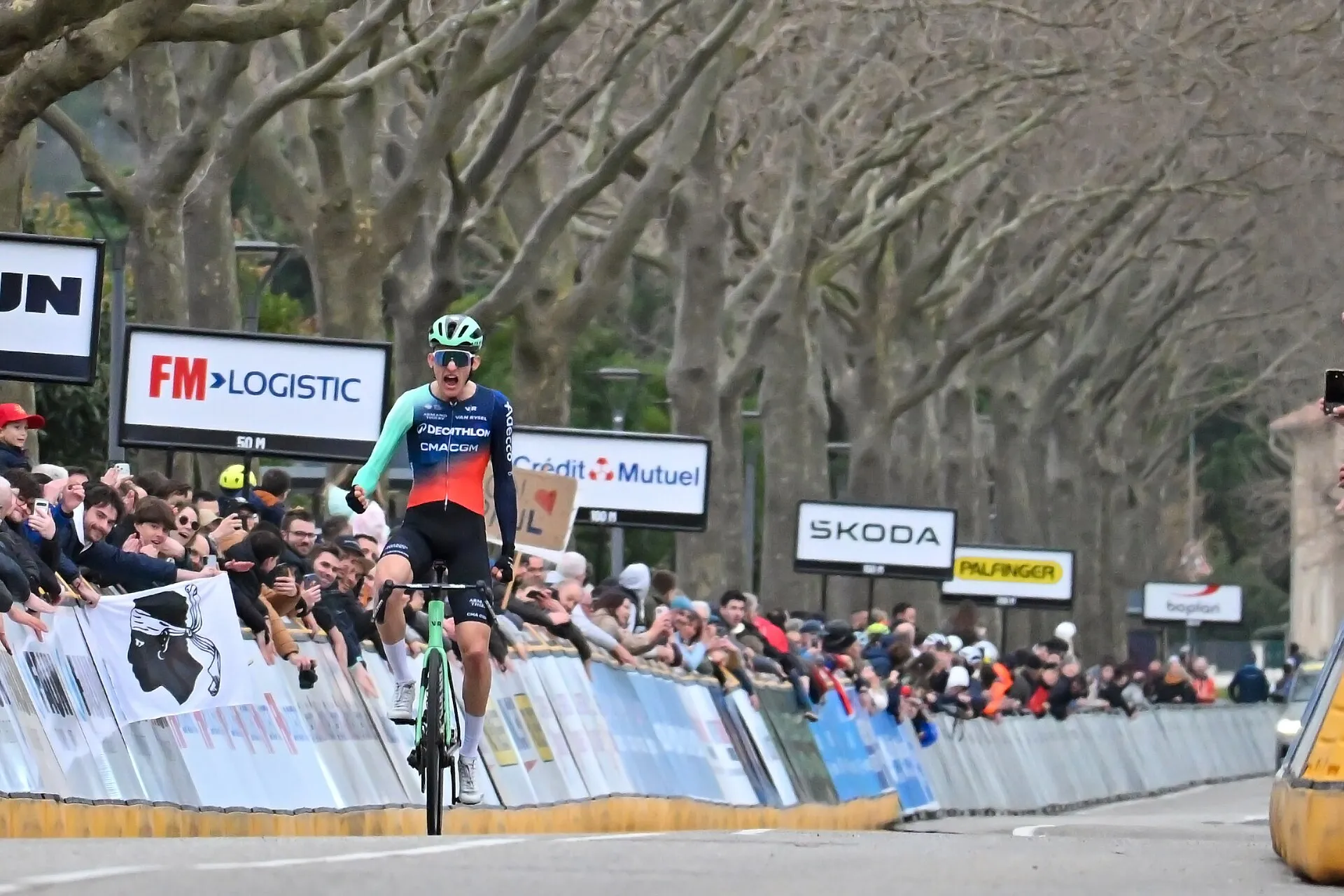
!Paul Seixas riding solo to victory at the Faun Ardèche Classic 2026
Credit: Kakoula10, Wikimedia Commons, CC BY-SA 4.0
The riders' union, the CPA, has warned that the danger is not theoretical. It said there had been multiple incidents this week alone involving motor vehicles on race courses, and pointed to crashes at recent races including Tre Valli Varesine and Coppa Bernocchi. Earlier in the week, riders Thomas Gloag and Marcel Camprubi were struck by a police motorcycle. The protest was the peloton's way of saying enough.
Cycling has wrestled with safety for years — from barrier design at finishes to the conduct of race vehicles — but the death of a young rider and a cluster of vehicle incidents in a single week pushed the issue to breaking point. For more on elite sport's big stories, see our sports coverage.
The safety debate framed a race already missing its dominant figure. Tadej Pogacar, winner of the past five editions, was absent after crashing at the Vuelta a España two months ago — an injury that ended his 2026 season early, according to Canadian Cycling Magazine.
With the Slovenian sidelined, the field was wide open. New European road champion Evenepoel, runner-up in the last two editions, started among the favourites alongside new world champion Brandon McNulty, recent Grand Prix Cycliste de Montréal winner Isaac Del Toro, Giulio Ciccone, Seixas and Britain's Tom Pidcock. Nine climbs were spread across 239 kilometres from Bergamo to Como, ending with a brutal final circuit around Lake Como featuring the San Fermo della Battaglia and the fearsome Civiglio.
The decisive moment came on the Civiglio, roughly 19km from the finish. As the favourites' group thinned on the steep ramps, Seixas launched his attack. Pidcock and Ciccone were the only riders able to follow his wheel — and within a few hundred metres, the young Frenchman had dropped them both.
What followed was a masterclass in solo riding. Seixas crested the climb with roughly half a minute in hand, took calculated risks on the descent, and then extended his advantage on the final ascent of San Fermo della Battaglia. Behind him, Enric Mas — the Vuelta a España champion — rode through into second, while Ciccone held off the chase for third.
Seixas crossed the final climb with close to 50 seconds in hand and rode into Como alone, savouring the final kilometre. He finished 48 seconds clear of Mas, with Ciccone third at 1:05 and Evenepoel — who had faded in the final hour — fourth at 1:20.
The statistics of the victory are extraordinary. At 20 years and change, Seixas is the youngest winner in the history of the Giro di Lombardia and the youngest winner of any of cycling's five Monuments since 1944. He is the first Frenchman to win a Monument since Julian Alaphilippe at Milan-San Remo in 2019, and the first French winner of the Lombardia since Thibaut Pinot in 2018.
It was his first Monument victory, claimed in only his third appearance in the race — he finished seventh last year. His breakthrough follows a fourth-place finish at this year's Tour de France and second place behind Pogacar at Liège–Bastogne–Liège, marking him as the most exciting young stage racer of his generation. It has been a golden month for French sport — racehorse Daryz made history with back-to-back Prix de l'Arc de Triomphe triumphs.
The win also offered redemption. Just two weeks earlier, Seixas had endured what he described as a huge disappointment at the World Championships, finishing 15th after starting among the favourites. Reuters reported that his Decathlon CMA CGM team set the pace all day to position their young star for the decisive move.
For Evenepoel, the day was a disappointment. With Pogacar absent for the first time in six editions, the Belgian had his best chance yet at the race — but he could not follow when Seixas accelerated on the Civiglio. "I didn't come here for fourth place," he said afterwards, admitting his legs had filled up in the final hour. Veterans know that form is fleeting: tennis great Novak Djokovic collected his 102nd career title this month at an age when most athletes are long retired.
The Belgian still recovered enough to contest the minor placings, but fourth was well short of his ambitions. CyclingUpToDate detailed how the race unfolded on the final climbs, while Channel News Asia carried Reuters' account of the Frenchman's historic ride.
The juxtaposition of the day's two storylines — a protest over safety and a teenage prodigy's coronation — captures professional cycling's current moment. The sport is producing extraordinary young talent, from Seixas to Del Toro to Pidcock, while struggling to protect them on increasingly chaotic roads.
The CPA's demand is simple: fewer vehicles on race courses, stricter protocols for the ones that remain, and real accountability when incidents happen. Whether Saturday's demonstration moves governing body the UCI to act remains to be seen, but the peloton has rarely spoken with such unity.
For Seixas, the victory announces him as a rider who can win the sport's biggest one-day races as well as contend in Grand Tours. France has waited years for a successor to its great champions; on the roads around Lake Como, the wait may finally be over. For more cycling and sport analysis, visit Verity's sports section or read about our newsroom.