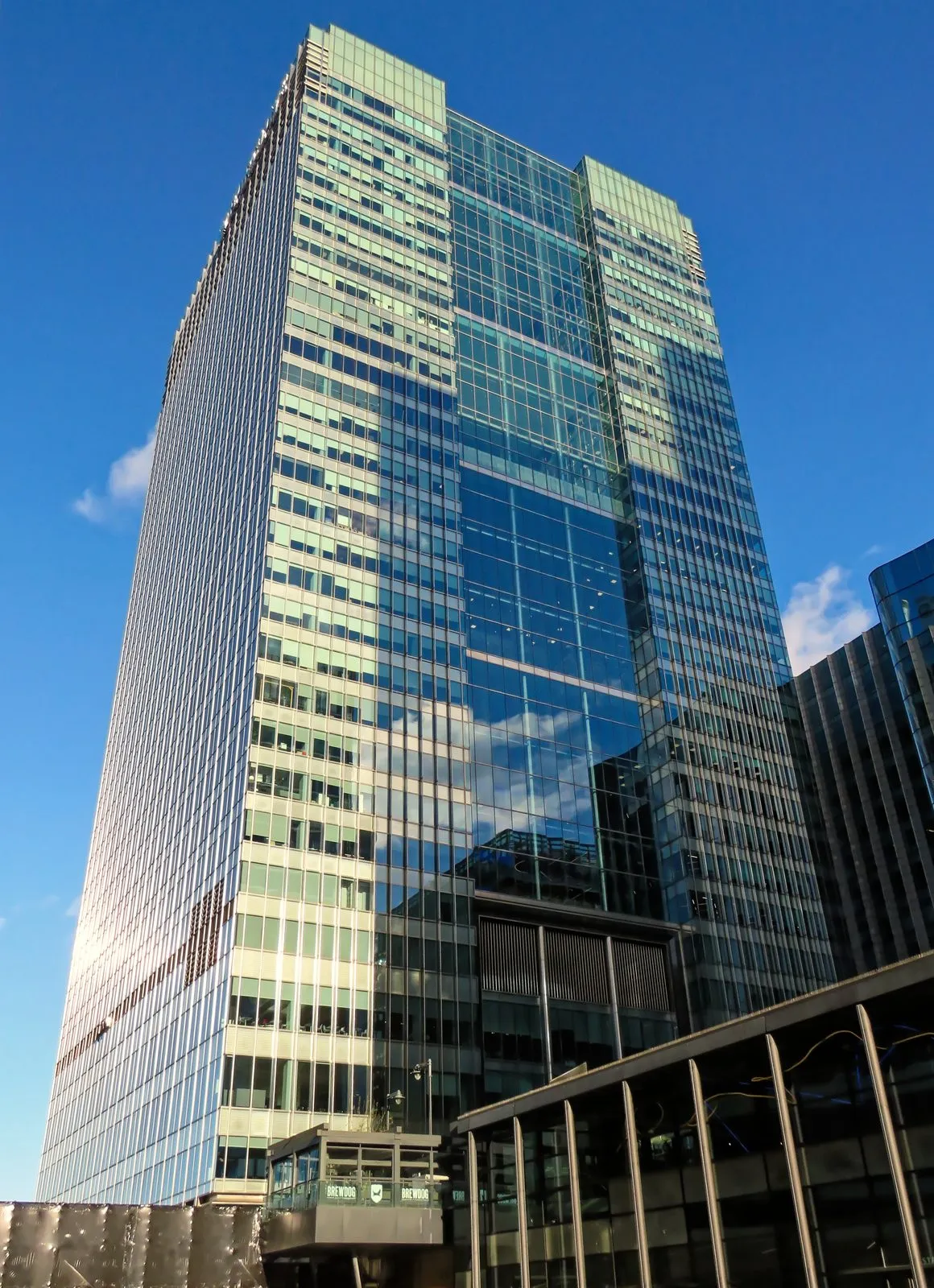
 The Barclays global headquarters tower at 1 Churchill Place in Canary Wharf, London.
Photo by Acabashi, via Wikimedia Commons, licensed CC BY-SA 4.0.
Barclays has unveiled plans to cut around 5,000 jobs this year, in one of the clearest signals yet from a major bank that artificial intelligence is beginning to reshape the industry's workforce. The British lender announced the reductions on Thursday as it reported third-quarter profits that fell short of analyst expectations, weighed down by a weak performance in its fixed-income trading business.
The job cuts, equivalent to roughly five per cent of Barclays' headcount, are being driven by what the bank described as simplifying the organisation and squeezing efficiencies from AI-driven technology change, the BBC reported. Around 60 per cent of the roles being eliminated sit in support functions, including developers — a striking detail that underlines how the technology is now reaching the technical staff who once helped build the systems replacing them.
Chief financial officer Anna Cross told reporters that approximately 1,000 positions had already been removed, with the remaining 4,000 to go by the end of the year. The bank said the reductions were subject to consultation with employees where required, and booked a further £201 million in restructuring charges during the quarter as part of its longer-term drive to reduce expenses through greater use of technology.
Profits rise but miss the mark
The restructuring news arrived alongside Barclays' results for the three months to the end of September. Pre-tax profit came in at £2.3 billion, up 12 per cent from a year earlier but undershooting the roughly £2.4 billion consensus forecast. Earnings per share rose 18 per cent to 12.3p, while return on tangible equity — a closely watched measure of how efficiently a bank uses shareholders' money — climbed to 11.7 per cent from 10.6 per cent a year earlier.
The bank also announced a £500 million share buyback, a sweetener for investors designed to return capital even as the workforce shrinks. Barclays shares, which have fallen about 12 per cent so far this year in line with European banking peers, were little changed on the day of the announcement, outperforming other lenders on a weak session for the FTSE 100 index. Heavyweight banks dragged the index to its lowest level in a week, while Brent crude jumped more than three per cent to above $112 a barrel — its highest since May — fanning inflation concerns and leaving a Bank of England rate rise in November largely priced in by investors.
The miss on profit was driven largely by Barclays' traditional stronghold of fixed-income trading. Income from the fixed income, currencies and commodities division fell 19 per cent to £1 billion, hit by weaker client activity in rates and credit products as the quarter wore on and by a difficult macroeconomic backdrop in September. That downturn was only partly offset by a strong performance in equities, where income surged 47 per cent to £1 billion on the back of prior investment in prime financing and equity derivatives. Investment banking income dipped three per cent to £1.1 billion.
A disappointed chief executive
Chief executive C.S. Venkatakrishnan did not hide his frustration with the trading performance. "I am disappointed, and you can be sure this will get my attention," he said of the fixed-income business, blaming a volatile quarter and soft trading in rates and credit products in particular.
He struck a more upbeat note on the bank's overall trajectory, saying he was pleased with the momentum of its operational and financial performance. He said that with one quarter left of the bank's original three-year plan, Barclays had either achieved or was on track to achieve all of its 2026 group targets, adding that it remained confident in and committed to the 2028 targets laid out earlier this year.
The bank said it expects total costs of about £18.5 billion this year and £18.4 billion in 2027, with structural cost reductions in the year to date running at roughly double the level of the last two years. A further £300 million of structural cost actions is planned for the final three months of the year.
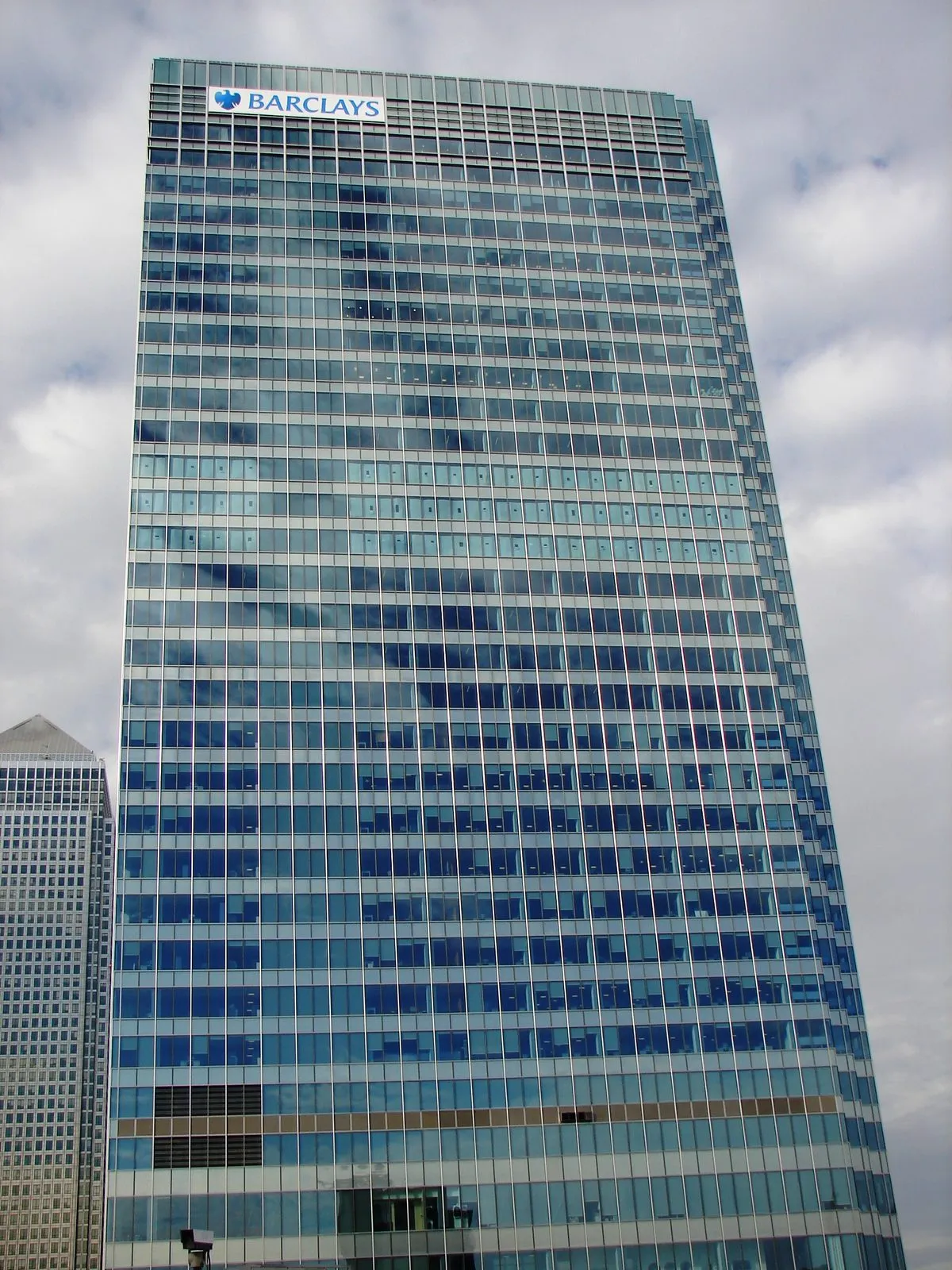 The Barclays Bank world headquarters building.
Photo by Bajajvikram, via Wikimedia Commons, public domain.
AI comes for the banking back office
The most striking element of the announcement was the explicit link to artificial intelligence. The bank said it was structurally shrinking its cost base by cutting full-time-equivalent roles through technology, in order to free up capacity to invest elsewhere in the business. Venkatakrishnan called AI the "icing on the cake" of the bank's investment in technology, according to the Wall Street Journal.
Analysts said the move was a landmark moment for the industry. Will Howlett, a financials analyst at fund manager Quilter Cheviot, said the reductions showed how profoundly AI and automation could reshape banking employment over the next few years.
Barclays is far from alone. Companies worldwide, including technology giant Microsoft and fellow banking group HSBC, have announced layoffs this year as automation increasingly affects employment — a trend that has also touched the UK betting industry, where Verity recently covered 1,400 job cuts at Paddy Power owner Flutter. Germany's Commerzbank and Norway's DNB are among the banks that have outlined plans to shed jobs and push AI further into their operations.
Not every bank has managed the transition smoothly. In May, Standard Chartered chief executive Bill Winters said AI would allow the bank to replace "lower-value human capital", before later walking back the comments and apologising — a reminder that how lenders talk about the technology matters almost as much as how they deploy it.
A wider pressure on UK workers
The Barclays announcement lands at a sensitive moment for the British labour market. Official figures have shown UK job vacancies falling to a five-year low as smaller firms cut back on hiring, while in the United States employers added just 29,000 jobs in September, a sharp slowdown in the jobs market on both sides of the Atlantic.
For Barclays' own staff, the coming weeks will bring clarity on which roles are affected. The bank stressed that the 5,000 figure reflects the expected fall in full-time staff from structural cost actions taken during 2026, and that consultations will take place with employees as required. It did not say how many of the 5,000 jobs were specifically down to AI and how many to simplifying the organisation.
What to watch next
Investors will be watching two things in the months ahead. The first is whether the investment bank's fixed-income business can recover from a bruising quarter, with Venkatakrishnan having personally put the unit on notice. The second is whether Barclays' AI-driven efficiency drive delivers the promised savings without damaging the service and expertise that keep clients loyal.
The bank's 2026 targets remain within reach, it says, and the 2028 goals laid out earlier this year are unchanged. Full details of the quarterly results are published on Barclays' investor relations site, which says it has either achieved or is on track to achieve all of its 2026 group targets. But with around 4,000 more roles to be removed before Christmas and the broader questions over how the economy is really performing under pressure, the final quarter of the year will be a stern test of whether technology-led restructuring can coexist with the growth Barclays has promised shareholders.