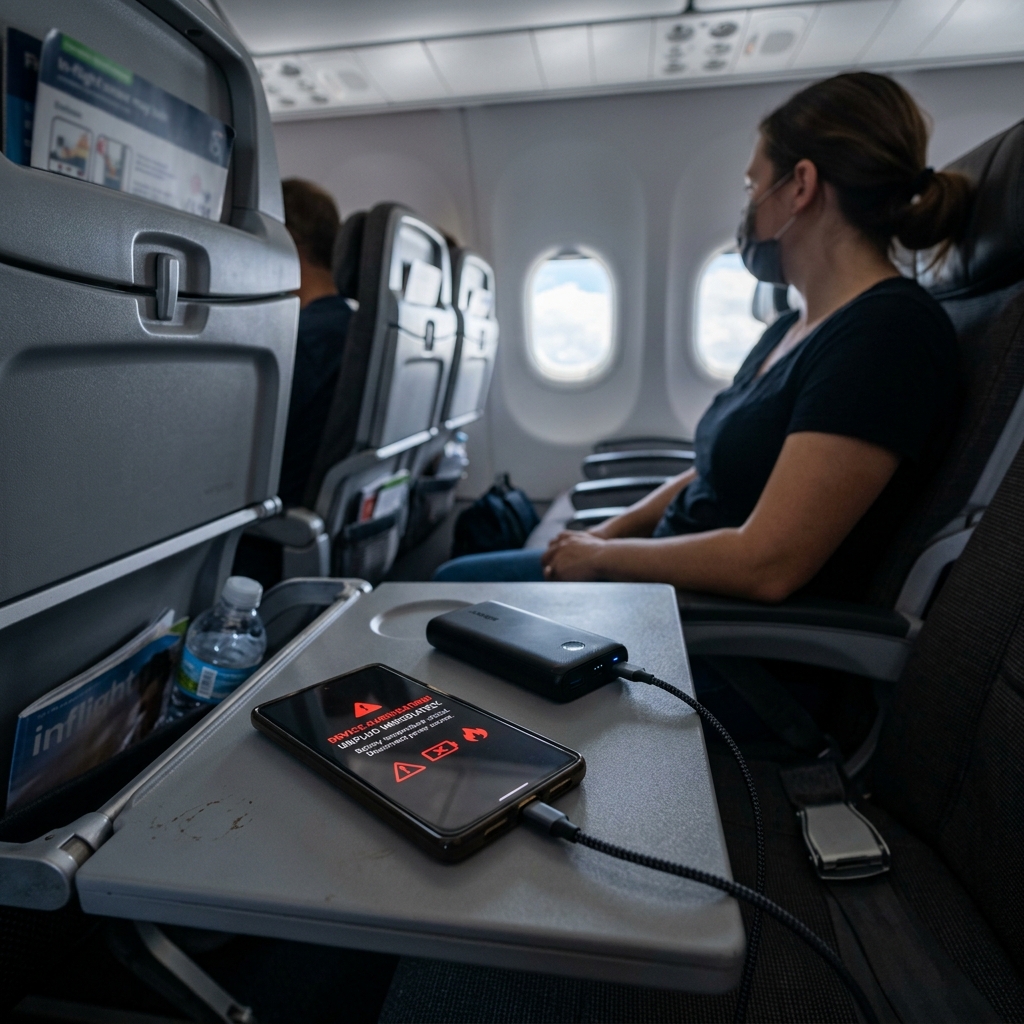
London: As millions of travelers prepare for the busy summer holiday season, aviation authorities are urging passengers to review what they pack before heading to the airport. The warning comes amid growing concern that everyday electronic devices powered by lithium batteries—including power banks, e-cigarettes, smartphones and laptops—have become one of the most significant fire hazards on commercial aircraft.
According to aviation safety officials, incidents involving lithium-powered devices have increased noticeably over the past year, prompting renewed efforts to educate passengers about safe packing practices. Experts say that while modern electronic gadgets have become essential for travel, the batteries that power them can pose a serious risk if damaged, defective or exposed to excessive heat.
Authorities are particularly concerned about passengers placing power banks or electronic cigarettes in checked baggage, where any fire could remain undetected until it becomes a much larger emergency.
Why Lithium Batteries Present a Unique Risk
Lithium-ion batteries are now found in nearly every portable electronic device. Their ability to store large amounts of energy while remaining lightweight has made them the preferred power source for modern technology.
However, engineers warn that these batteries can enter a dangerous condition known as thermal runaway. This occurs when internal damage, manufacturing defects, overheating or physical impact causes a battery to rapidly generate heat. Once the process begins, temperatures can rise dramatically within seconds, releasing flammable gases and potentially igniting nearby materials.
Unlike ordinary electrical fires, lithium battery fires are extremely difficult to extinguish because the battery continues producing heat even after flames appear to be under control.
For this reason, aviation safety experts consider prevention far more effective than emergency response.
Increase in Battery-Related Incidents
Recent aviation safety reports indicate a steady increase in incidents involving lithium-powered devices carried by airline passengers.
Authorities recorded hundreds of cases in which prohibited battery-powered items were discovered inside checked baggage before departure. Reports involving overheating batteries, damaged power banks and malfunctioning electronic devices have also increased compared with previous years.
Although most of these situations were identified before they developed into major emergencies, aviation officials say the growing number of incidents reflects the rapid increase in electronic devices carried by travelers.
Many passengers now travel with smartphones, laptops, tablets, wireless earbuds, smartwatches, cameras, rechargeable fans and portable charging banks—all powered by lithium batteries.
The more battery-powered equipment passengers carry, the greater the importance of following airline safety regulations.
Why Cabin Storage Is Safer Than Checked Luggage
One of the most common questions travelers ask is why airlines require power banks and vaping devices to remain inside cabin baggage instead of checked luggage.
The answer lies in accessibility.
If a battery overheats inside the passenger cabin, flight attendants can usually detect smoke immediately and respond using specialized fire containment equipment carried onboard modern aircraft.
Crew members receive regular training on handling battery-related emergencies, including procedures for cooling damaged devices and preventing fires from spreading.
By contrast, if a battery catches fire inside the aircraft’s cargo hold, detection may take much longer. Although cargo compartments contain fire suppression systems, rapidly developing lithium battery fires can still present significant operational challenges.
This difference explains why aviation regulators around the world consistently advise passengers to keep portable batteries with them during the flight rather than placing them in checked baggage.
Growing Use of Portable Power Banks
Power banks have become one of the fastest-growing travel accessories in recent years.
With travelers relying heavily on smartphones for boarding passes, navigation, communication and entertainment, portable chargers have become almost indispensable during long journeys.
However, safety experts say many consumers unknowingly purchase low-quality products that lack adequate safety protections.
Counterfeit batteries or products manufactured without proper quality controls may contain inferior components, increasing the risk of overheating, short circuits or battery failure.
Consumer protection organizations recommend purchasing power banks only from reputable manufacturers that comply with recognized international safety standards.
Electronic Cigarettes Also Require Care
Rechargeable vaping devices present similar concerns because they also rely on high-capacity lithium batteries.
Improper storage, damaged batteries or accidental activation inside luggage can all create fire hazards.
Some incidents have occurred after pressure inside bags activated vape devices during transport, causing batteries to overheat.
For that reason, most airlines require electronic cigarettes to remain inside carry-on baggage and prohibit passengers from charging or using them during flights.
Travelers are also advised to protect battery terminals from accidental contact with metal objects such as keys or coins.
Airlines Strengthen Passenger Awareness
Airlines and aviation authorities are increasing efforts to educate passengers before they travel.
Many carriers now include battery safety reminders during online check-in, booking confirmations and airport announcements.
Security staff also continue inspecting luggage for prohibited battery-powered items before aircraft are loaded.
When restricted devices are discovered inside checked baggage, airline staff often need to locate and remove the suitcase before departure.
This additional process can delay flights and create operational challenges for airports during busy travel periods.
Industry representatives say improved passenger awareness remains the most effective way to reduce unnecessary delays and improve overall flight safety.
Understanding Thermal Runaway
The greatest concern surrounding lithium batteries is a chain reaction known as thermal runaway.
During this process, internal temperatures rise rapidly, causing battery cells to break down chemically while releasing heat and flammable gases.
Once initiated, the reaction can spread from one battery cell to another, making the fire increasingly difficult to control.
Although such incidents remain relatively uncommon compared with the enormous number of lithium batteries used every day, aviation authorities emphasize that the consequences inside an aircraft can be particularly serious.
For this reason, manufacturers continue developing improved battery management systems designed to reduce overheating risks.
Tips for Travelers Before Flying
Aviation safety experts recommend several simple precautions that significantly reduce the risk of battery-related incidents during air travel.
Passengers should:
* Pack power banks, electronic cigarettes and spare lithium batteries in their carry-on baggage.
* Avoid carrying damaged, swollen or cracked batteries.
* Purchase charging devices from trusted manufacturers rather than unknown third-party sellers.
* Protect battery terminals from contact with metal objects.
* Switch laptops completely off before placing them in checked baggage if airline rules permit.
* Never charge portable power banks during a flight unless specifically permitted by the airline.
* Review airline battery policies before traveling, as restrictions may differ depending on battery capacity.
Following these recommendations helps protect both passengers and crew while reducing the likelihood of travel disruptions.
Technology’s Growing Impact on Aviation Safety
The increase in battery-related incidents reflects broader changes in modern travel.
Passengers today carry significantly more electronic equipment than they did a decade ago. Smartphones, tablets, wireless headphones, portable gaming devices and rechargeable accessories have become routine travel companions.
While these technologies improve convenience, they also require airlines to adapt safety procedures to evolving risks.
Aircraft manufacturers, regulators and airlines continue investing in better fire detection systems, improved crew training and updated operational guidance to address the growing presence of lithium-powered devices onboard commercial aircraft.
Industry experts believe battery safety will remain an important focus as consumer electronics continue expanding worldwide.
Shared Responsibility for Flight Safety
Aviation specialists emphasize that maintaining flight safety is a shared responsibility involving manufacturers, airlines, regulators and passengers.
Modern aircraft remain among the safest forms of transportation, and serious battery-related emergencies remain relatively rare. Nevertheless, even a single preventable incident can disrupt flights, force emergency landings and place passengers at unnecessary risk.
By understanding airline regulations and packing electronic devices correctly, travelers can play an important role in preventing avoidable safety incidents.
Conclusion
As international travel reaches peak summer levels, aviation authorities are reminding passengers that seemingly ordinary electronic devices require careful handling during flights. Power banks, vaping devices and other lithium battery-powered products have become essential parts of modern travel, but they also represent one of aviation’s fastest-growing safety concerns.
Keeping these devices in cabin baggage, avoiding counterfeit products and following airline instructions can significantly reduce the risk of onboard fires while ensuring safer journeys for everyone. As technology continues to evolve, passenger awareness will remain one of the most effective tools for maintaining aviation safety worldwide.